

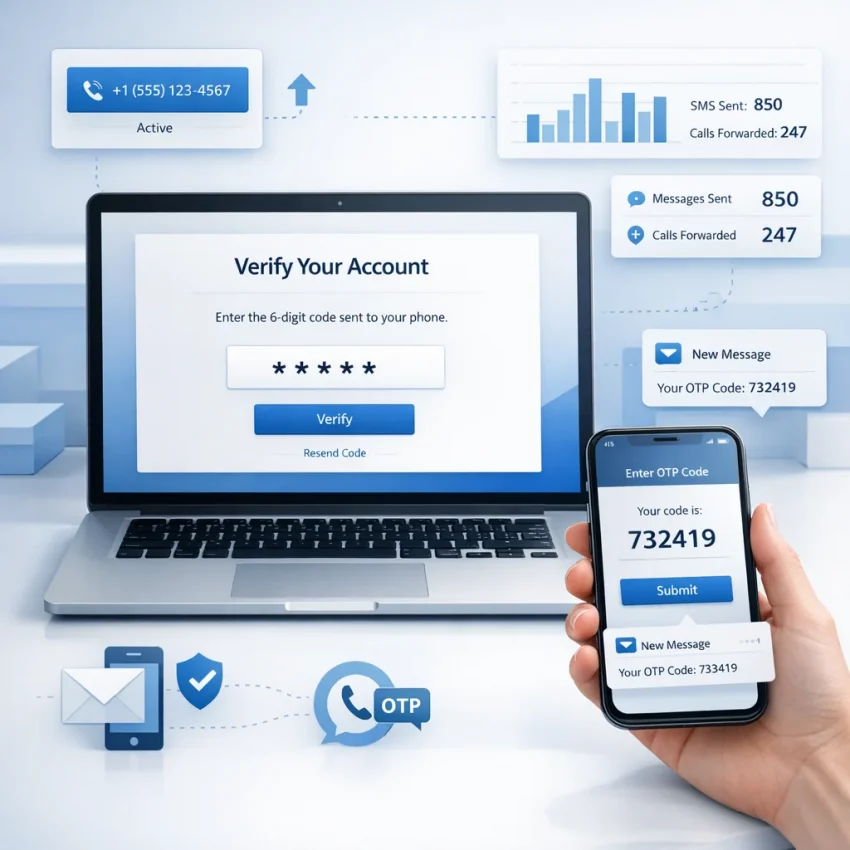
What OpenAI SMS Verification Looks Like in 2026 and Why Workflow Matters
OpenAI SMS verification in 2026 is a workflow problem, not just a number problem. Most users already understand OTPs. The real challenge is finishing OpenAI phone verification with fewer retries, less friction, and a lower chance of choosing the wrong number flow.
That is why the best OpenAI verification workflow starts with a service-specific path. Instead of browsing a generic list of numbers, use a platform built around verification and OTP receipt. For most users, the smarter starting point is Receive SMS online with SmsPva.
Search intent has shifted. Users looking for an OpenAI verification number usually want a practical sequence that works cleanly: choose the right service, pick a suitable country, receive the OpenAI SMS code, and finish without wasting time on avoidable mistakes.
Why generic number hunting creates friction
A generic marketplace flow often looks simple. You sort by price, grab the cheapest number, and hope the code arrives. In practice, that creates friction fast. The number may not fit the service context, the country may be a poor match, or the session may expire before you complete the step.
For OpenAI verification with a virtual number, context matters. You may only need a one-time OTP, but you still benefit from choosing a workflow designed for that exact use. A service-specific route narrows the decision early and makes the process more predictable.
That is the real value of SmsPva. It is built around virtual phone numbers for SMS verification, account activation, and privacy-focused OTP handling. That is more useful than a catch-all browsing experience where you have to guess which option is likely to fit best.
What the best 2026 workflow optimizes for
The best OpenAI verification workflow in 2026 optimizes for speed, clarity, and decision quality. It should help you answer simple questions before you spend anything: which service entry matches OpenAI, which country is worth trying first, and whether you need a one-time verification or a broader account setup workflow.
A strong workflow also keeps expectations realistic. No platform should promise guaranteed delivery or universal availability. What a good provider can do is make the process cleaner, show the relevant service path, and help you receive an OpenAI OTP online with less guesswork.
That is why this guide centers on SmsPva rather than a generic number search. Users want the fastest route from selection to code entry. In 2026, that means using a verification platform built for service-specific SMS flows.
The Best OpenAI SMS Verification Workflow With SmsPva: Step by Step
If your goal is fast openai sms verification, the cleanest path is a service-specific workflow, not a random number hunt. OpenAI phone verification is sensitive to context, so a generic approach usually creates more guessing around number fit, country choice, and timing.
Start with the OpenAI-related SmsPva service page: 1 OpenAI API (chatGPT, DALL-e 2) SMS verification. That gives you a better starting point than choosing a generic virtual number with no service context.
Step 1: Choose the OpenAI-specific service flow first
Your first decision should be the product area, not the country. Pick the OpenAI-related page before you compare listed options. This is the main reason a service-specific workflow beats a generic SMS marketplace. You are selecting for an OpenAI SMS code, not just any incoming SMS.
That reduces wasted attempts. You avoid unrelated number contexts and stay closer to the actual verification task. If you need to receive an OpenAI OTP online, this should be your first filter.
Once you are on the correct page, review the currently listed countries. Do not assume every country is equally useful. Availability and price can differ, so choose from what is shown on the service page rather than guessing blindly.
Step 2: Pick a country, then activate the number
After selecting the service page, choose a country that fits your signup context. If your account setup is tied to a region, stay consistent where possible. If not, choose the best available option shown on the page instead of chasing the absolute cheapest listing by reflex.
At the time of writing, API snapshots for 1 OpenAI API (chatGPT, DALL-e 2) showed United Kingdom options listed from $0.50 and $0.58, while the United States was listed at $1.75. Treat these as current snapshots, not guarantees. The point is simple: country and price can vary, so check before you activate.
Once you choose a country, request the number and keep the session active. Copy the number carefully, then go straight to the OpenAI verification screen and enter it exactly as shown. Small formatting mistakes can create avoidable failures.
Do not open too many parallel attempts. A focused one-session workflow is usually faster. Enter the chosen number once, submit it, and wait for the SMS request to process.
Step 3: Wait for the OTP, enter it quickly, and handle misses cleanly
After submission, watch the SmsPva session for the incoming message. This is where users often create their own delay. They refresh too aggressively, request a second number too early, or restart the form before the first attempt finishes.
When the code arrives, enter it immediately. Verification windows are time-sensitive, so speed matters once the SMS lands. Make sure you are using the most recent code, not one from an earlier attempt.
If no code appears after a reasonable wait, do not force the same stale path. End that attempt, choose another suitable number or country from the same service-specific flow, and retry with a fresh session. That is still more efficient than jumping to a random marketplace listing with no OpenAI context.
For most users seeking OpenAI verification with virtual number support, this is the lowest-friction route: use SmsPva, open the correct OpenAI page, choose a sensible country, activate one number, submit it carefully, and switch methodically if the first attempt does not complete.
How to Choose the Right Number, Country, and Session Type for OpenAI Verification
If you want a smooth OpenAI phone verification flow, the biggest mistake is choosing a number first and the service second. That generic habit creates avoidable failures. Start with the exact service route, then narrow by country, then confirm the session type.
A good virtual number for OpenAI should match the actual task: one verification event, one expected OTP, one clear country choice, and one short session window. If your goal is simple activation, a one-time SMS flow is usually the cleanest fit.
Choose the service first, then the country
Country choice matters, but not in isolation. Users often chase the cheapest listing without asking whether that country fits the account context. A better workflow is to choose the OpenAI-specific service page first, then review which listed country best matches your setup.
If your broader context is US-oriented, a United States option may be more logical. If your setup is UK-based, a United Kingdom number may feel more consistent. Consistency does not guarantee success, but it can reduce unnecessary mismatch.
Pricing should be treated as a live snapshot, not a promise. At the time of writing, SmsPva listed the OpenAI-related service in the United Kingdom from $0.50 for one country-code variant and $0.58 for another UK variant, while the United States was listed at $1.75. Those numbers show why buyers should compare country fit and price together.
The cheapest option is not always the least wasteful if it leads to retries. The right habit is to check the current service page, confirm the country, and only then start the activation attempt.
Pick the right session type and avoid low-context selections
For most users seeking an OpenAI verification number, a single-use SMS session is the practical default. You want a short, focused process: obtain the number, request the code, receive the OTP, enter it, and finish.
Privacy-focused users should think about context, not just cost. A service-specific route on SmsPva is cleaner than choosing a random number from a generic pool and hoping it works for OpenAI. The more precise the number selection, the less friction you create for yourself.
There is a simple rule for avoiding bad picks: do not choose a number only because it has the lowest visible price. A low-context selection can become expensive if you lose time to expired codes, mismatched countries, or avoidable retries.
Before checkout, ask four questions: Is this the exact OpenAI service page? Does the country fit my account context? Is the listed price reasonable for a one-time OTP? Do I have a fallback country in mind if the first attempt stalls?
Why SmsPva Is the Smarter Option for OpenAI Verification Than Generic SMS Tools
For openai sms verification, the main risk is not just price. It is workflow mismatch. Many generic SMS tools make users start with a random number and hope the platform accepts it. That creates friction before the OTP even has a chance to arrive.
SmsPva is the smarter choice because it is built around service-specific verification flows. Instead of treating every activation the same, it gives users a more targeted path for OTP receipt. That matters when you need an OpenAI verification number and want to reduce wasted attempts.
Service-specific flow beats random number hunting
The practical advantage is simple: start with the right intent. If you are verifying OpenAI, use the matching service flow rather than a generic number bucket. That service-first layout improves decision-making by narrowing selection, making country checks more meaningful, and giving you a clearer basis for retry decisions.
Generic marketplaces often blur these steps together. Users pick the cheapest visible number, ignore service context, and only discover the mismatch after a failed code attempt. SmsPva reduces that failure pattern by making the service choice part of the workflow from the start.
This is especially useful for users who need predictable OTP receipt rather than endless browsing. Testers, privacy-focused users, and operators usually care more about a clean process than chasing the lowest headline price on a random listing.
Better support and privacy-focused workflow design
SmsPva also stands out because the platform is broader than temporary number access alone. It includes support resources and related tooling that fit real verification workflows. That matters when a code is delayed, a session expires, or you want cleaner account isolation.
For many users, privacy is one reason to use a virtual number for OpenAI. SmsPva aligns well with that need by supporting OTP-focused use cases without forcing a messy marketplace experience. You can approach the task as a controlled activation flow: choose the right service, confirm country fit, receive the SMS, and complete the prompt with less noise.
If you are comparing service-specific workflows more broadly, the same structure appears on pages like Signal SMS verification. The value is the same: start with the service, then narrow the country and session choices instead of improvising from a random list.
In account isolation scenarios, related proxy tooling can also help separate sessions or testing environments. That does not guarantee outcomes, but it is more useful than a barebones tool that only sells a number and leaves the rest to chance.
Common OpenAI SMS Verification Problems and How to Fix Them
Even a strong openai sms verification workflow can fail on small details. Most issues come from timing, country selection, session handling, or using a number outside the right service flow. The fastest fix is to diagnose the failure before buying another number.
If you get stuck on platform behavior or account steps, check the Help page before repeating the same attempt.
No OpenAI SMS code received yet
The most common issue is simple: no code received. First, confirm that you entered the number correctly, including the country code. Then check whether the verification request was actually submitted on OpenAI’s side. If the form never completed, no SMS may have been triggered.
Next, give the request a reasonable wait window. Users often refresh too fast, close the session early, or trigger a second send before the first request finishes routing. That can create confusion around OTP receipt, especially if a later request invalidates an earlier code.
If nothing arrives after a normal wait, do not keep hammering resend. Review the basics: correct number, correct service flow, and a stable session. If all three look right, switch to a different number or country combination inside SmsPva rather than forcing the same path.
Expired sessions, wrong country, and invalid number context
An expired session is another frequent problem. This happens when you acquire a number too early, leave the page idle, or delay the final submit. The fix is procedural: have the OpenAI screen ready first, acquire the number second, and request the code only when you can enter it right away.
Country mismatch can also break verification. A cheap option is not always the best option. If your account setup or signup path points to one region and the phone number points elsewhere, the attempt may fail or become less efficient. When a country choice looks wrong, change the country instead of repeating the same route.
Sometimes the issue is broader number context. A number may be valid in general but still be a weak fit for that exact verification attempt. That is why SmsPva’s service-specific workflow is usually the smarter path.
As a rule, retry only after you identify what failed. If the code never arrived, test a new number. If the session expired, restart cleanly. If the country looked off, change the country. Move step by step instead of improvising mid-process.
OpenAI Verification Cost, Efficiency, and Buyer Checklist Before You Start
If you want the best OpenAI SMS verification 2026 workflow, start with selection discipline rather than speed alone. Most wasted attempts happen before the number is even rented. The right number should match the exact service flow, fit your intended country context, and give you a clean path to receive the OTP without extra guesswork.
Buyer checklist: what to confirm before purchase
Use this checklist before you request a virtual number for OpenAI:
- Service match: Make sure you are using the OpenAI-specific flow, not a generic catch-all category.
- Country fit: Pick the country intentionally. Do not assume the cheapest route is the best route for OpenAI phone verification.
- Single-use context: Treat each attempt as a focused verification session. Avoid mixing unrelated signup steps before the SMS arrives.
- Timing readiness: Be ready to paste the OpenAI SMS code as soon as it arrives. Delays create avoidable expiry issues.
- Fallback plan: Decide in advance when you will retry, replace the number, or switch country instead of waiting too long.
This checklist improves efficiency because it reduces low-quality attempts. In practice, fewer failed starts matter more than chasing the absolute lowest listed price.
Cost signals and the final go/no-go decision
Price matters, but only in context. At the time of writing, SmsPva API snapshots for 1 OpenAI API (chatGPT, DALL-e 2) showed United Kingdom pricing listed at $0.58 and $0.50 depending on country-code variant, while the United States was listed at $1.75. These are snapshots, not permanent promises, and should be checked live before purchase.
The useful takeaway is not that one country is always better. It is that pricing can vary by route, and the cheapest option is only efficient if it fits the verification context and receives the OTP in time.
Before you start, ask three final questions: Is this the exact OpenAI flow? Does this country make sense for my session? Am I ready to complete the code entry immediately? If yes, proceed with SmsPva and follow the service-specific workflow rather than a generic marketplace search.