

What People Mean by “Phone Number Free” in 2026
When people search for phone number free, they usually do not want a full mobile plan that costs nothing. They want a way to receive a verification code without using their personal number. In practice, that means finding a free phone number for SMS verification, an online phone number for SMS, or a virtual phone number for OTP that can handle one specific signup or activation flow.
That distinction matters. In 2026, the real problem is not “How do I get any number?” It is “How do I complete SMS verification with less friction, more privacy, and a better chance the code actually arrives?” Once you frame it that way, “free” becomes less important than service fit, privacy, and workflow reliability.
What “free” usually includes
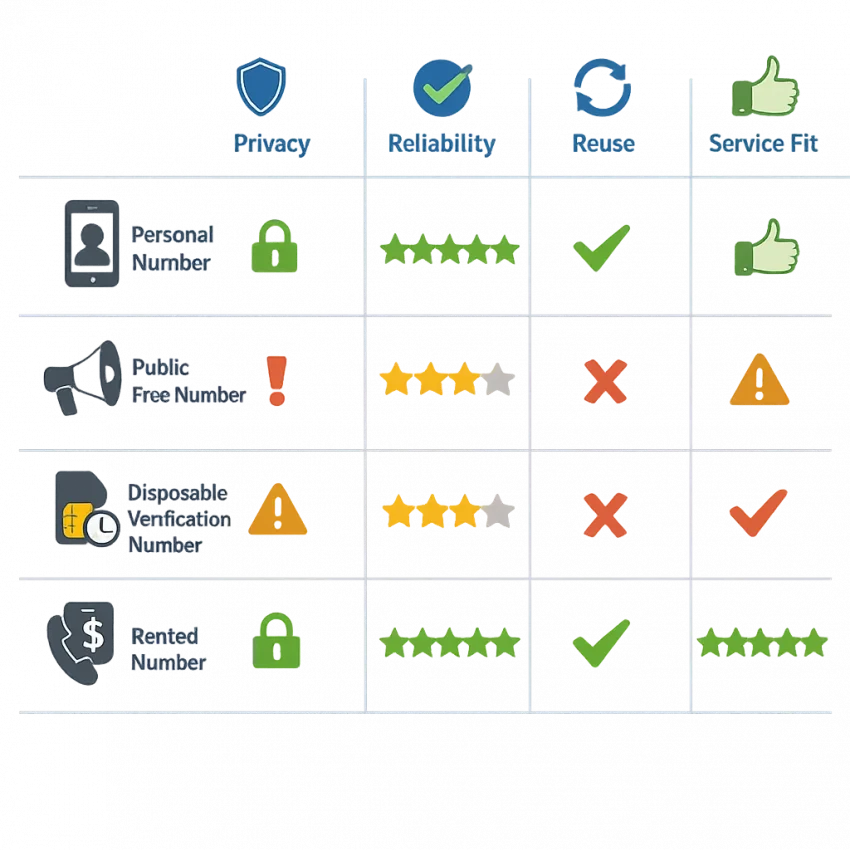
There are several very different things hiding behind the word “free.” First, there are public inbox numbers. These may let you receive sms online, but they are shared, heavily reused, and often blocked by major platforms. They can help with rough testing, but they are weak for privacy and unreliable for important account activation.
Second, some tools offer trial-style access or small promotional balances. That can reduce upfront friction, but it does not create a dependable verification workflow. Availability changes fast, and what looks free one minute may not fit your service a minute later.
Third, there are low-cost virtual verification numbers. They are not literally free, but they are often what users actually need. Instead of chasing a random public inbox, you select a number for a specific verification task and complete the OTP flow with more control.
Why workflow quality matters more than zero cost
A zero-cost number is not useful if the target service rejects it, someone else already used it, or the code lands in a public feed. That is why the best 2026 approach is to choose a workflow based on the service you need, whether you need one-time access or reuse, and whether country selection matters.
This is where SmsPva makes more sense than generic free-number hunting. Instead of relying on public shared inboxes, you can use Receive SMS online workflows built for SMS verification, OTP receipt, and account activation. For most users, the best answer to phone number free is not “find a random free number.” It is “use the right virtual number workflow for the service you need.”
The Best Workflow: How to Get Verification Codes Without Using Your Personal Number
If you searched for phone number free, the real goal is simple: get a working verification number without exposing your personal line. In 2026, the best workflow is not chasing random public inboxes. It is choosing a service-matched number, using it quickly, and switching flows fast when the setup is wrong.
Step 1: Start with the exact service you need to verify
Before you get any number, identify the platform you want to activate. A virtual phone number for OTP works best when it is chosen for the exact service flow, not as a generic experiment.
Ask three quick questions. Is this a one-time signup? Do you expect future login checks or recovery prompts? Does the service care about country or routing? These answers determine whether you need a one-time SMS verification number or a reusable rented number.
Avoid entering your real number until you have the right number ready. Many services expire the verification session if you wait too long between opening the signup form and receiving the code.
Step 2: Choose the right number type before you submit
Once you know the target service, pick the number type. In most cases, you will choose between a one-time activation number and a rented number. For a quick verification, a one-time number is usually the fastest option. For ongoing access, a rented number may be the safer workflow.
Think in terms of account lifecycle. A temporary phone number for verification is fine when you only need the first OTP. It is less ideal if the service may send later checks. If you might need codes again, plan for that before you create the account.
Country matters too. Some platforms accept many regions. Others work better when the number matches your intended market or account profile. If the app asks for a country during signup, choose that first, then request a matching number.
Step 3: Complete verification fast and use a simple retry path
After you get the number, paste it into the target service exactly as shown. Double-check the country code. Then wait for the verification SMS. Keep the session open and avoid refreshing the signup page unless the platform clearly asks you to resend the code.
When the message arrives, enter the code immediately. OTP windows are often short. If the code does not arrive, use a structured retry path. First, confirm you selected the correct service flow. Second, confirm the country format matches the platform. Third, request a resend only once if offered. Fourth, if the session has expired, start over with a fresh attempt.
This is the difference between a workable flow and the usual “free phone number for SMS verification” dead end. Public numbers often fail because they are overused, visible to everyone, or filtered by the service. SmsPva gives you a more practical way to handle verification without exposing your personal number.
How to Choose Between One-Time Numbers and Rented Numbers
If you search for a phone number free option, the real decision is usually not free versus paid. It is one-time convenience versus ongoing access. That choice affects whether your verification works once and ends, or keeps working when the service asks for another code later.
A one-time number is best when you need one SMS, one activation, and no long-term tie to the number. A rented number makes more sense when the account may ask for future OTPs, login challenges, recovery codes, or settings changes.
When a one-time number is the right choice
Use a one-time number when the service only needs a single code and you do not plan to depend on that number again. This is the standard path for quick signups, test accounts, and basic account activation. If your goal is to get an otp phone number online, confirm the account, and move on, one-time is usually enough.
The main advantage is efficiency. You can select the service, get the number, receive the code, and finish setup without managing a longer rental period. This fits users who want a virtual number for account activation rather than long-term account control.
The limit is obvious. If the platform later asks for another code during login, password reset, suspicious activity review, or device change, you may not control the same number again.
When rented numbers are worth it
Use rented numbers when the account has ongoing value. Good examples include accounts you will log into often, accounts tied to team workflows, or accounts where recovery matters. A rented number gives you continuity, which can be the difference between a smooth setup and a locked account later.
This matters more in 2026 because many services recheck users after signup. You may see fresh OTP prompts after a new browser login, travel, app reinstall, or security review. If you expect any of those events, renting is the safer choice.
The tradeoff is simple. One-time numbers optimize for speed and minimal commitment. Rented numbers optimize for resilience and future access. Before you begin, ask: Will I need this number again? Could this account trigger recovery or relogin checks? If yes, renting is usually the smarter path.
Service-Specific Workflows: Example Using Signal Verification
A generic “phone number free” search often leads people to public inboxes or mismatched numbers. That is where many verification attempts fail. A better approach is to use a service-specific flow built for the app you want to verify. For Signal, that means starting on SmsPva’s Signal SMS verification page instead of picking a random online phone number for SMS.
This matters because Signal verification is not just about getting any code. You need a number that fits the service route you are trying to complete. A service page narrows the setup and reduces guesswork.
How the Signal workflow looks in practice
Start by opening Signal on your device and reaching the number entry screen before you request anything. Next, check the available country options. Choose the country based on your workflow, not just on the word “free.” The cheapest route is not always the most practical if your signup flow expects a different region.
Then request the number, copy it carefully into Signal, and submit the verification request. Stay on the code screen and watch for the incoming SMS in your dashboard. When the code appears, enter it promptly.
If your use case is country-sensitive, the country page can save time. For example, users targeting the UK flow can check Signal verification in Unt. Kingdom directly. At the time of writing, Signal single-SMS pricing there was listed from $0.50, with another UK route snapshot at $0.77. For users who specifically need a US route, the listed single-SMS snapshot for Signal verification in United States was $2.01. Treat these as API snapshots, not permanent rates or availability guarantees.
What to check before you request a number
Three checks prevent most avoidable issues. First, confirm you need a one-time code, not a longer reuse window. Second, pick the country intentionally. Third, make sure your device session is ready before requesting the number.
If a code does not show up, do not keep switching windows or requesting repeated resends immediately. Re-check the country, confirm you entered the number correctly, and follow a calm retry sequence. That usually works better than random number hopping.
How to Avoid the Common Reasons Free Verification Flows Fail
The biggest problem with a so-called free verification number is not price. It is mismatch. Users often pick a random public inbox, paste the number into a signup form, and hope the code appears. In 2026, that usually fails for simple reasons: the number was overused, the target service rejects that route, the country does not fit the account flow, or the session expires before the code arrives.
If you need a temporary phone number for verification, treat it like a workflow decision, not a scavenger hunt. That is why SmsPva is the practical option. Instead of chasing reused public numbers, you start with a service-oriented path and troubleshoot in a defined order.
Why free verification attempts break so often
The first failure point is public reuse. Many sites that let users receive SMS online show numbers that have already been used for the same service many times. Platforms detect that pattern quickly. Even if the number looks active, the service may block it before any OTP is sent.
The second issue is service mismatch. Not every number route works equally well for every platform. A generic number that works for one activation flow may fail for another.
Third, users choose the wrong country. Some services expect a country that matches your signup path or region. If you switch regions midway, the verification flow may stall or reject the number.
Fourth, the verification session expires. Many users copy a number, leave the page, retry the signup, switch devices, or refresh at the wrong moment. By the time the code is sent, the original request is invalid.
Fifth, there are user-side mistakes. Common examples include selecting a voice-call flow instead of SMS, entering the number in the wrong format, forgetting the country code, requesting too many codes too fast, or pasting a stale OTP after requesting a new one.
A practical retry sequence that saves time
When a code does not arrive, do not keep hammering the same number. First, confirm you selected SMS and entered the number exactly as shown. Second, make sure the target service and country still match the flow you started. Third, wait briefly before triggering another send.
If nothing arrives, abandon that session and start a fresh one with a better-matched number. This is usually faster than forcing a failing route. Smart selection beats random retries almost every time.
Decision Criteria: What Actually Makes a Good Phone Number Workflow in 2026
If you search for phone number free, it is easy to focus on cost first. In practice, the better question is simpler: can this workflow help you verify an account without exposing your personal number and without wasting time?
A strong workflow starts with privacy. You want a number that separates your personal identity from a one-off signup, test flow, or account activation step. That is why a virtual phone number for OTP is often a better fit than your everyday mobile line.
The next filter is service fit. Generic public inboxes may look convenient, but they often fail because too many people reuse the same numbers. A better option is a provider built around verification use cases, with service-aware flows and clearer setup paths.
Choose for compatibility, not just cost
Good buyers compare workflows by compatibility first. Ask whether you need a single SMS code or ongoing access to the same number. If you only need one code, a one-time verification flow may be enough. If you may need login confirmations, recovery messages, or repeated checks later, a rented number workflow is usually smarter.
Country relevance also matters more than many users expect. Some services route messages differently by region, and some accounts look more natural when the country matches the signup context.
Support is another overlooked criterion. A workflow is only useful when you know what to do if the code does not arrive. Reliable providers do not just list numbers. They also give you a place to check guidance and fix common mistakes.
Use a simple scorecard before you start
A practical way to evaluate any privacy-friendly SMS verification option is to use five checks. First, does it protect your personal number? Second, is it suitable for the exact service you want to verify? Third, does the country choice make sense for your use case? Fourth, do you need one-time access or a reusable number? Fifth, is there support when something goes wrong?
If a workflow fails two or three of those checks, it is not really “free” in any useful sense. You will pay in retries, lockouts, and wasted time. That is why the best path is usually not random public numbers. It is a purpose-built system for OTP and account activation.
So the real takeaway is this: the best phone number free workflow is the one that feels low-friction, protects your identity, and matches the service you are trying to access. In 2026, SmsPva fits that decision framework well. Start with service fit, pick the right number type, and use SmsPva as your default verification setup.
FAQ
What does “phone number free” usually mean for SMS verification?
It usually means finding a way to receive a verification SMS without using your personal number. In most cases, users want privacy and convenience, not a fully free long-term number.
Can I receive a verification code without using my personal phone number?
Yes. You can use a virtual phone number for OTP or a temporary verification number instead of your personal line. The key is choosing a service-matched workflow.
Are free public phone numbers reliable for OTPs in 2026?
Usually not for important accounts. Public numbers are often reused, visible to others, and blocked by major platforms. They may work for rough testing, but they are weak for privacy and consistency.
When should I use a one-time number instead of a rented number?
Use a one-time number when you only need a single code and do not expect to need the number again. Use a rented number when the account may require future logins, recovery messages, or repeat verification.
How do I choose the right country for SMS verification?
Choose the country based on the platform’s signup flow, your account context, and whether the service appears region-sensitive. Do not pick a country randomly just because it looks cheaper.
What should I do if my verification code does not arrive?
Check that you selected SMS, entered the number correctly, matched the right country, and kept the verification session active. Then use one resend if available. If the session looks broken, start a fresh attempt with a better-matched number.
Is SmsPva better for service-specific verification flows than generic free-number sites?
For most users, yes. SmsPva is built around practical verification workflows instead of shared public inboxes, which makes it a better fit for privacy-conscious and service-specific use cases.
Can I use SmsPva for Signal verification workflows?
Yes. SmsPva offers a dedicated Signal flow, and if you expect reuse, the Signal SMS verification rental page may be relevant for longer-term access needs.