

What people mean when they search for an SMS free number
When someone searches for an “SMS free number,” they often mean a number listed on a public website where visitors can view incoming texts. These services may be supported by advertising, but the number and inbox are typically shared. That distinction matters when you need a code for a specific account.
A free number to receive SMS may be useful for a low-stakes test. But it is not the same as having a personal phone line, and it may not suit an important account.
How public SMS inboxes work
A public SMS inbox displays messages sent to a number on a webpage. Anyone with access to that page may be able to read its messages. The number may also be used by many people, so an inbox can contain messages intended for someone else or fail to show the text you expect.
Availability can change without notice. A number might be offline, already associated with an account, or unable to receive messages from a particular platform. Some services block numbers they recognize as shared or temporary. The platform may reject the number or not send a verification text.
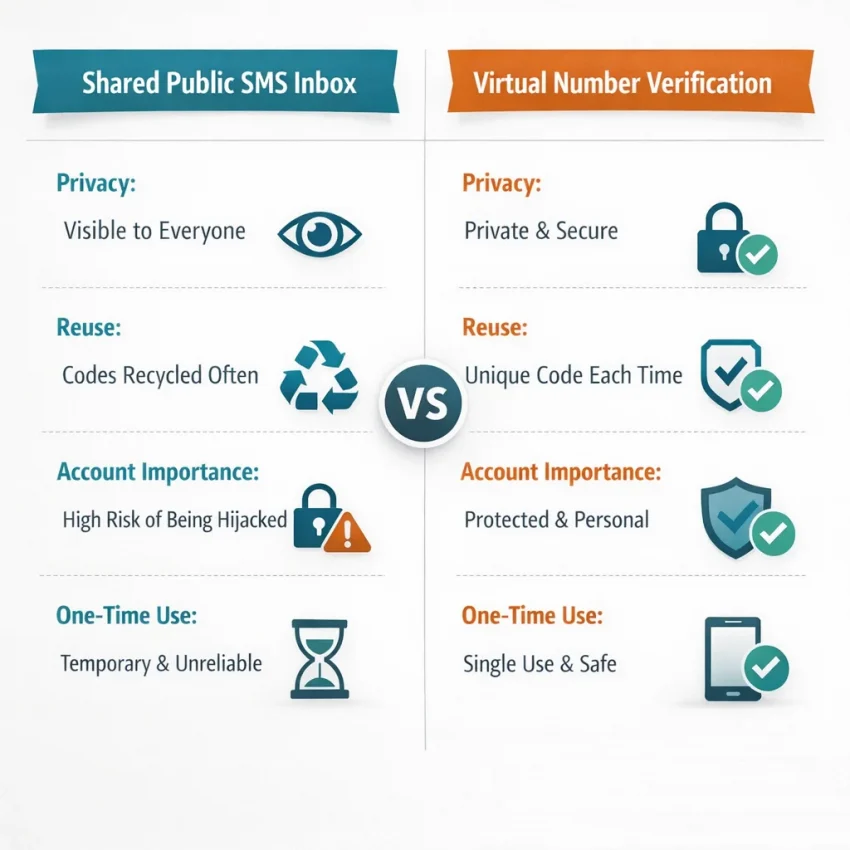
These are the main public SMS inbox risks: messages may be visible to strangers, numbers may be reused, and you may have little control over continued access. Do not use a public inbox for passwords, account recovery, financial services, or personal information.
How SmsPva fits the search
SmsPva provides virtual numbers for SMS verification and OTP receipt. It is not a public free-number inbox, and you should not assume a number or verification is free. Check the current listing and terms before choosing. A virtual number can offer a more structured workflow than a shared public inbox, but it does not guarantee privacy in every sense or acceptance by a platform.
For a legitimate one-time verification, start at SmsPva’s Receive SMS online page and review the options shown there. Services, countries, and terms can vary. Check the current details and use a number only where the platform permits it.
Neither a public inbox nor a virtual number guarantees a code. Receipt and acceptance depend on the platform, number, and current availability. If the platform rejects the number or the text does not arrive, do not treat repeated attempts as a sure fix. For important accounts, use a durable contact method that the platform accepts and that you can access later.
When a public free number is—and is not—a good fit
A public SMS inbox may seem simple: choose a number, enter it, and look for a code online. But other visitors may see incoming messages, and the number may already have been used—or could be reused later.
That makes a public inbox a narrow-use tool, not a private substitute for your own phone number. Consider what the account will contain, whether you need it again, and whether the service permits temporary or shared numbers.
When a public inbox may be acceptable
A public inbox might be reasonable for a low-risk, one-time test when the target service allows it and the message contains no sensitive information. Even then, assume strangers may read the text. Do not use the inbox if the code, message, or resulting account could expose personal details.
Availability is uncertain. A public number may be offline, receive messages for another user, or have a history that causes a platform to reject it. Some services limit sign-ups by number or block certain number types. A missing code does not necessarily mean you entered something incorrectly.
Follow the target service’s terms. If they disallow temporary numbers, choose another permitted method rather than trying to get around the restriction.
When sharing creates too much risk
Do not use a shared number for an account tied to your identity, private conversations, payment details, work, or other sensitive information. Other people may view messages that reveal a code or that you are creating or accessing an account. Someone who later receives messages sent to a reused number could also encounter account-related texts.
A public number is especially unsuitable for ongoing access or recovery. If you lose access and the platform sends a new code to that number, you may not control the inbox. Use a durable recovery method accepted by the service for any account you need to keep.
Repeated use also brings uncertainty: a number that worked once may later be unavailable, shared with someone else, or refused. A temporary number for SMS verification is not a reliable way to preserve access over time.
Choosing a more controlled option
If a shared inbox is too exposed for a legitimate one-time verification, consider a virtual-number workflow instead. SmsPva provides virtual numbers for SMS verification, but it does not promise a free number, a delivered code, or acceptance by every platform. Check the live service and country options, listing details, and applicable terms before choosing.
Use any number only for an account you are allowed to create and control. Do not use temporary numbers to evade a ban, impersonate someone, or facilitate abuse. If the platform rejects a number, stop and use an approved verification method. For important accounts, prioritize a number and recovery option you can retain.
How to use SmsPva for an SMS verification workflow
If a shared public inbox does not suit your needs, a virtual phone number for SMS verification can offer a more structured workflow. SmsPva provides virtual numbers for SMS and OTP receipt, but it does not promise a free number or successful verification. Options and acceptance depend on the live listing and the target service’s rules.
Before starting, make sure the verification is for your own legitimate use and that temporary or virtual numbers are allowed under the target service’s terms. For an important account, consider whether you will need the same number later for recovery. A number intended for one-time verification may not suit ongoing access.
1. Check the live service and country options
- Open SmsPva. Visit the Receive SMS online page and look for the service you intend to verify. Use the live site rather than assuming a service or country is always available.
- Review the country choices. Compare the options currently shown for that service. Choose only a country the target platform permits and that fits your verification needs. A listing does not guarantee that the platform will accept the number.
- Read the listing and terms. Check the current details, including any displayed cost and conditions. Do not assume the number is free, reusable, or available until you have reviewed the live listing.
If there is no suitable option, stop and check again later or use a verification method supported by the target service. Do not choose an unrelated service or country just to force the workflow forward.
2. Enter the number and watch for the message
- Select an appropriate number. Follow the steps shown on SmsPva. Copy the number carefully, including its country code, and check it before entering it elsewhere.
- Submit it only in the intended verification flow. Open the official app or website for the service. Enter the number in its phone verification field and request an SMS only when you are ready to check for the message.
- Check for an incoming SMS. Monitor the relevant message area in the SmsPva interface. If a message arrives, read the code and enter it promptly in the original verification flow.
Treat an OTP as a secret. Do not send it to another person, post it publicly, or use it to approve an action you did not initiate. The target platform controls whether it accepts the number and completes verification.
3. Stop if the number is rejected or no code arrives
If the number is rejected or no message appears, pause before trying again. Confirm that you selected the intended service and country, entered the number correctly, and are checking the matching message area. A code may not arrive, and a platform may decline a virtual number even when it appears in a listing.
Avoid repeatedly requesting new codes or cycling through numbers. Repeated attempts can trigger limits, and they do not guarantee that a later request will work. If the listing is unavailable or the platform rejects the number, stop and use a verification method the service supports. For setup questions, consult SmsPva Help.
This process lets you check the current options and make an informed choice. It does not make a temporary number equivalent to a personal, recoverable phone number. Keep a durable recovery method for accounts that matter, and check the live listing and target service’s rules each time.
A service-specific example: checking a Signal verification option
A service-specific listing can make it easier to see whether a virtual number might fit a particular verification flow. Signal is one example, but its requirements and acceptance decisions may differ from those of other platforms. Check Signal’s current terms and setup instructions before using any number.
SmsPva has a Signal SMS verification page to inspect. Treat it as a place to review current options, not as a promise that a number will be available or accepted.
Review Signal and country options first
Before selecting anything, open Signal’s current registration flow and confirm what it asks you to do. Then check the SmsPva Signal page for the service and country options shown at that time. Options, listings, and prices can change; rely on the live page rather than an old screenshot or someone else’s experience.
If you are considering a UK number, inspect the Signal verification option for the United Kingdom. This is an option to review, not evidence of current stock or a guarantee that Signal will accept it. Check the listing’s details and terms before proceeding. If the country you need is not shown, do not assume another country will be suitable.
- Check Signal’s instructions. Use its official setup flow and make sure your intended use follows its terms.
- Review the live listing. Confirm that Signal and the country you want appear as options. Read the displayed details before choosing.
- Select only if it fits. Consider the current listing and any costs. Do not treat a temporary number as a durable contact or recovery number.
- Enter the number in Signal’s intended flow. Check the digits carefully and submit the number only where Signal requests it.
- Check for the message. Monitor the SmsPva interface. If a code arrives, enter it promptly in Signal and do not share it.
Know when to stop
Signal may reject a number, or the SMS may not arrive. A service-specific page helps you inspect the relevant option, but it cannot establish that a particular attempt will succeed.
If Signal declines the number or no message appears after a reasonable wait, avoid repeatedly requesting codes. Repeated attempts may trigger platform limits. Stop and review the current instructions and listing instead of trying to bypass a rejection. For important accounts, use a number Signal accepts and that you can access later.
This example is specific to Signal; do not assume the same guidance applies to other services. Follow Signal’s terms, use verification only for a legitimate purpose, and check the live listing before each attempt.
Troubleshooting: what to do if the verification SMS does not arrive
A missing verification text does not necessarily mean you entered something incorrectly. The platform may not accept a particular SMS verification number, the number may no longer be available, or the message may not arrive. SmsPva cannot guarantee that every platform will send a code to every number.
Work through a few basic checks before trying again. Repeatedly requesting an OTP can trigger limits on the platform. If a number is rejected or unavailable, stop rather than looking for a way around that restriction. Follow the platform’s terms and use temporary numbers only for legitimate purposes.
Check the service, country, and number
- Confirm the selected service. Make sure the listing matches the platform sending the verification text.
- Recheck the country option. Review the selected country and the live listing. Service rules and number acceptance can differ by country.
- Verify the number entry. Compare the number shown in SmsPva with the number entered on the platform. Look for missing digits, extra spaces, or an incorrect country prefix.
- Wait briefly, then revisit the message area. Allow a reasonable amount of time. Return to the relevant message area or refresh it if the interface offers that option. Check that you are viewing the correct activation or number.
- Read the platform’s status or instructions. Follow its guidance if the request failed, expired, or needs a different method.
If a code appears, enter it only in the verification flow you started. Do not post it publicly or share it with anyone who contacts you. If it has expired, follow the platform’s instructions.
If the message still does not arrive
Review SmsPva’s Help guidance for setup or support information. Confirm that the listing remains available in the live interface. Availability can change, and a selectable number does not guarantee that the platform will accept it or send a message.
If no message appears after a reasonable wait, or the platform explicitly declines the number, stop that attempt. Avoid cycling through repeated code requests: the platform may impose temporary limits, and repeated attempts do not ensure delivery. Do not use a temporary number to evade a ban or bypass a platform restriction.
For an important account, especially one you may need to recover later, use a durable number that the platform accepts and that you can access over time. If the current option does not work for a legitimate one-time verification, review the live service options and terms. Otherwise, use a verification method offered directly by the platform.
Choosing between a free public inbox and SmsPva
Compare the trade-offs
A search for an SMS free number can lead to two different options. Public SMS inboxes show messages received by numbers shared among many users. SmsPva provides virtual phone numbers for SMS verification; do not assume the service is free. Check the live listing and current terms before choosing.
The right option depends on what you are verifying and what could happen if someone else sees or later uses the number. A public inbox may be convenient for a low-risk, one-time test when the platform permits it. But you may have no control over who can view its messages, whether someone has already used the number, or whether it remains available. Platforms may also reject public or virtual numbers.
| Consideration | Public free-number inbox | SmsPva virtual number |
|---|---|---|
| Message privacy | Messages may be visible to anyone using the inbox. | Review the live service flow and terms; do not treat a verification number as a private, permanent line. |
| Reuse and control | Numbers are shared and may be reused or unavailable. | Choose from options shown for the service and country, subject to live availability. |
| Cost | May be advertised as free, but availability and acceptance can vary. | Review the current listing and any applicable cost before proceeding. |
| Important accounts | Poor fit for sensitive access or account recovery. | Still not a substitute for a durable number accepted by the platform. |
Neither route guarantees that a code will arrive or that a platform will accept the number. Follow the platform’s terms, and never use a temporary number to impersonate someone, evade enforcement, or conduct abuse.
Match the number to the account
For a low-stakes, one-time verification, a public inbox might be adequate if you accept that its messages are exposed and the number could fail. If a shared inbox is unsuitable, SmsPva offers a structured way to select a virtual number for a specific service and country. It still does not make a number exclusive forever or ensure successful verification.
For accounts you may need to recover, prioritize a stable number that you control and that the service accepts. A temporary number can become unavailable, and a later user of a recycled number may create complications. Avoid tying financial access, identity records, or important recovery methods to a number you cannot reliably access.
With SmsPva, review the current service, country, and price details before selecting anything. Listings can change; do not rely on an old price or assume a particular country or service is available. If the displayed terms do not suit your purpose, stop and choose another method permitted by the platform.
Make a practical choice
Choose a public inbox only when its shared nature is acceptable. Consider SmsPva when its current virtual-number options fit a legitimate one-time workflow. Check that the intended service and country appear in the live options, review the listing and terms, and proceed only if they fit. If the platform rejects the number or a message does not arrive, avoid repeated attempts that could trigger limits.
Use this checklist before choosing:
- Purpose: Is this low-risk and genuinely one-time, or will you need ongoing access?
- Privacy: Could exposure of the message or number put an account at risk?
- Recovery: Do you need a durable number you can keep controlling?
- Acceptance: Do the platform’s terms allow the number type you plan to use?
- Availability and cost: Have you checked the live service, country, listing, and terms?
For important accounts, use a personal, recoverable number whenever the platform requires or recommends one.
Frequently asked questions
Is SmsPva a free SMS number service?
Do not assume it is free. SmsPva provides virtual numbers for SMS verification, and listings may have costs or conditions. Check the live listing and current terms before choosing.
Can I receive a verification code with a free public SMS number?
It may work for some low-risk cases, but public numbers can be shared, reused, unavailable, or rejected by a platform. Messages may also be visible to other people. Do not use a public inbox for sensitive accounts.
How do I receive an SMS code through SmsPva?
Check the live service and country options, review the listing and terms, select an appropriate number, and enter it only in the intended verification flow. Then check the relevant message area for an incoming text. A code is not guaranteed.
Why is my SMS verification code not arriving?
Confirm the service and country, recheck the number, and revisit the message area after a reasonable wait. The platform may reject the number or the message may not arrive. Avoid repeated requests, which can trigger platform limits.
Are public free SMS inboxes private?
No. Messages in a public inbox may be visible to anyone who can access it. Shared numbers are unsuitable for sensitive accounts, passwords, or account recovery.
Can I use a temporary number for account recovery?
For important accounts, use a durable number accepted by the platform and available to you over time. A temporary number may become unavailable and may not work for future recovery.
Does SmsPva support every service or country?
No universal availability should be assumed. Check the live options for the intended service and country before proceeding. A listing does not guarantee that a platform will accept the number or send a code.