

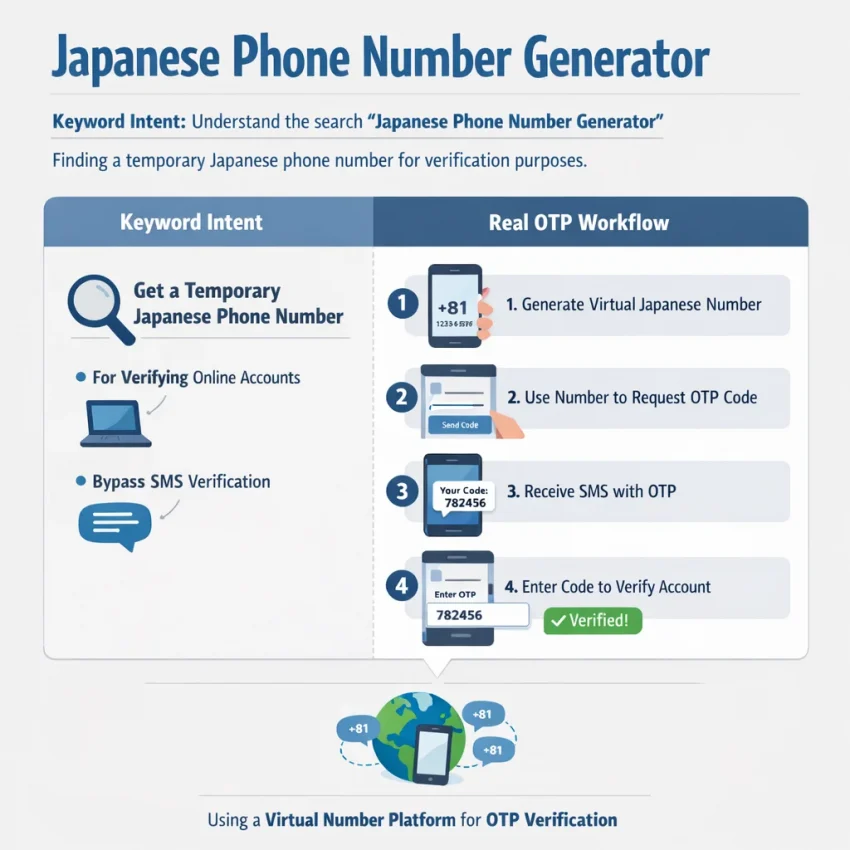
What People Mean by a Japanese Phone Number Generator in 2026
In 2026, most people who search for a japanese phone number generator do not want random digits. They want a number that can actually receive an OTP or verification SMS. In practice, they need a virtual Japanese phone number for a real signup, login, or account activation flow.
That is the key difference. A random-number tool can show Japanese-looking formatting, but it cannot receive a code for you. For SMS verification, privacy-focused signups, and short-term activation tasks, the goal is a working workflow. That means choosing the right country, matching the right service when available, and monitoring the incoming SMS.
This is why the better question is not “How do I generate a Japanese number?” It is “How do I get a japan phone number for verification and complete the OTP step?” For that, SmsPva is the practical option because it is built around SMS verification, not fake number display. You can Receive SMS online through a workflow that is designed for real verification steps.
Why random numbers are not enough
Most users expect a generator to do three jobs: create a number, make a service accept it, and let them receive the code. Only the third part matters. If the platform sends a text and you cannot access it, the number has no value for verification.
That is why receive sms online japan is a better way to think about this search. You need access to a live verification session, not just a string of numbers. Some services also behave differently by country, formatting rules, or reuse patterns, so the workflow matters more than the digits themselves.
What to look for instead
The best replacement for a Japanese phone number generator is a service that lets you match the number to the task. Usually that means checking whether Japan is the right country choice, whether a service-specific flow exists, and whether you need a one-time number or a rented one. Those decisions affect whether the OTP arrives and whether the signup makes sense for your use case.
If your goal is a japanese virtual number for otp, treat “generator” as shorthand for a verification workflow. Once you do that, the right decision criteria become much clearer.
When You Actually Need a Japanese Virtual Number
A Japanese number makes sense when the verification flow truly needs Japan, not when you simply want any temporary number. The best fit is usually OTP receipt, account activation, privacy separation, region-linked registration, or testing a Japan-specific onboarding flow.
Main use cases that justify choosing Japan
The first case is simple OTP receipt. You need one code, enter it, and move on. A temporary japanese phone number is often enough for that type of one-time verification.
The second case is account activation where country fit matters. Some services expect the number to match the selected region. If your signup flow, market selection, or customer journey is tied to Japan, a virtual number japan for account verification may be the better choice than picking another country at random.
Another common use case is privacy separation. Many people do not want to attach their personal number to every new app or test account. A Japanese virtual number helps separate those workflows while still letting you complete sms verification japan tasks.
Testing is another valid reason. If you want to check how a Japanese onboarding or activation flow behaves, you need a number that can receive the code during the session. That is very different from a fake generator.
What to verify before selecting Japan
Before you choose Japan, ask a few quick questions. Does the platform accept Japan in its phone field? Is the account meant for the Japanese market? Does the signup flow appear country-sensitive? If not, Japan may be unnecessary.
It also helps to check whether SmsPva has the right country path for your task. If Japan is the correct fit, review the Japan page for virtual numbers before you start. That keeps your workflow aligned with the real verification goal and reduces failed attempts caused by picking the wrong country.
If the task is genuinely Japan-linked, short-term, privacy-focused, or test-driven, SmsPva is a much better fit than a generic number tool because it is designed for actual OTP receipt.
The Best SmsPva Workflow for Getting a Japanese Number for Verification
If you search for a japanese phone number generator, what you usually need is a working japan sms verification number. The best workflow is simple: confirm that Japan is the right country, choose the target service when available, activate the number, request the OTP once, and monitor the session until the code arrives.
Step 1: Match the task to Japan first
Do not assume Japan is always the correct option. Some platforms use country checks, local formatting rules, or service-specific filters. Start by confirming that a Japanese number makes sense for the signup you are completing. This matters most for region-fit registration, privacy-focused setups, and testing workflows.
If your target platform has a service-specific route on SmsPva, use it. Service-first selection reduces guesswork and gives you a cleaner activation path. For example, if you are verifying Signal, the Signal SMS verification page shows how a dedicated service workflow works. At the time of writing, Signal in Japan was listed at $4.00 for a single SMS flow as an API snapshot. Treat that as a current reference, not a guarantee.
Step 2: Activate the number and enter it correctly
After choosing the workflow, activate the Japanese number and copy it exactly as provided. Do not add extra digits or switch formats unless the target site clearly asks you to. If the site has a separate country selector, choose Japan there and enter only the remaining digits as instructed. If it expects international format, use the full number exactly.
Then submit the number once. Avoid repeated clicks on “send code” in the first few seconds. Multiple requests can invalidate the first OTP or create confusion about which message belongs to the live session.
Step 3: Wait for the OTP without breaking the session
Keep the SmsPva session open and monitor the number status. This is the real answer to how to get a japanese number online for verification. Select the number, submit it on the target service, wait for the incoming SMS, and enter the code before the verification window expires.
If the code does not appear right away, first confirm the target service accepted the number. Then verify that you sent only one request and that you are still on the active verification page. Some services delay the SMS, while others show an error and still send the code later.
If needed, restart cleanly. Confirm the country-service match, begin a fresh activation, and resubmit the number carefully. This is much more reliable than using any generic “generator” tool because it follows the actual verification path.
How to Choose Between One-Time Numbers and Rented Japanese Numbers
Most users need either a one-time OTP number or a longer-use number for repeat access. That choice matters more than the word “generator.” In practice, you are deciding between a disposable session and a rented number with more continuity.
When a one-time number is the better fit
Use a one-time japan phone number for verification when the task is narrow and time-bound. Good examples include a single signup, a one-time login confirmation, a short testing session, or a privacy-focused registration where future SMS access is unlikely.
One-time numbers keep the process simple. You complete the OTP, finish the task, and move on. You do not need to manage the number afterward.
When renting a Japanese number is worth it
Choose a rented number when the account may request SMS again later. That includes repeated sign-ins, account recovery, step-up verification, or onboarding that runs over several days. In those cases, continuity matters more than speed.
If that matches your use case, the Japan rental path for virtual numbers is the better direction. A rented number can reduce friction because you are not rebuilding the verification flow each time.
A simple rule works well. Pick one-time for short tasks and uncertain future use. Pick rental when the account is important enough that losing access to future SMS would create extra work.
Common Verification Failures and How to Fix Them
Most failed Japanese verification attempts come from practical issues, not mystery errors. The usual causes are the wrong country choice, wrong service match, formatting mistakes, repeated code requests, or expired sessions.
Wrong country, wrong service, wrong format
The most common problem is a service-country mismatch. A platform may support some countries better than others, or expect a specific local format. A Japanese number is only useful when the target service actually accepts Japan for that action.
Formatting errors also cause silent failures. Enter the number exactly as the site expects. Some forms want a country selected separately. Others want the full international format. Avoid adding spaces, dropping the country code, or pasting extra symbols.
Another common issue is requesting multiple codes too quickly. Many services treat repeated requests as suspicious. Send one code request, wait a reasonable interval, and monitor the live session before retrying.
Delays, expired sessions, and restarts
If no code appears, timing is the next thing to check. Some platforms delay the OTP. Others send the first code late, then invalidate it after a second request. Keep the verification page open and avoid resetting everything too early.
Expired sessions are another frequent cause. A one-time number works best when you complete the whole flow in one sitting. If you leave the page, switch devices, or reopen an old signup step, the original session may no longer match the incoming code.
If a code arrives but fails, make sure you are using the newest one. Many platforms invalidate earlier OTPs instantly. Also confirm that you are entering it into the same live account flow that generated it.
If the same workflow keeps failing after a few clean retries, stop and restart methodically. A fresh activation with the correct country, the correct service flow, and the correct number format usually solves the issue faster than random retries elsewhere.
What to Look For in the Best Japanese Phone Number Generator Alternative
The best alternative to a basic Japanese phone number generator is a workflow-focused service. You want real verification support, not just number formatting. That means country fit, service-specific selection, clear OTP handling, rental options when needed, and a straightforward activation flow.
Core buyer criteria
Start with country relevance. A Japanese number only helps when the target platform accepts Japan or your testing flow needs Japan specifically.
Next, look for service-specific selection. Verification behavior often changes by platform, so it is better to choose the target service before buying the number. That lowers guesswork and reduces wasted attempts.
Then check workflow clarity. A strong provider should make it obvious how to select a number, request the code, monitor the session, and restart if the request expires. This is where generic number tools usually fail. They stop at number display instead of helping with the verification process.
Why SmsPva fits this search intent
SmsPva fits this buyer checklist because it is built around SMS verification, not random number generation. It supports one-time and rental paths, gives users country-based entry points, and makes service-specific flows possible when available. That matches what people actually mean when they search for a japanese number for sms code.
In short, the best choice is not a tool that creates Japanese-looking digits. It is a platform that helps you complete the real verification step with less friction. If your goal is OTP receipt, account activation, or privacy-focused signup, SmsPva is the practical place to start.
FAQ
What is the difference between a Japanese phone number generator and a virtual Japanese number for SMS verification?
A generator usually creates random digits in a Japanese format. A virtual Japanese number for SMS verification is a live number session that can receive an actual OTP. For verification, the second option is what matters.
Can I receive OTP codes with a Japanese virtual number?
Yes, that is the main use case. But the target service still needs to accept Japan for that verification flow, and delivery should never be treated as guaranteed.
When should I choose a rented Japanese number instead of a one-time number?
Choose rental when you expect future SMS events, such as account recovery, repeated logins, or longer onboarding. Choose one-time when you only need a single code.
How do I know whether Japan is the right country choice for my verification flow?
Check whether the service accepts Japan in its phone field and whether your signup is region-linked to Japan. If country fit does not matter, another option may work just as well.
Why is my Japanese verification code not arriving?
The usual reasons are wrong number format, wrong country choice, repeated code requests, delayed SMS dispatch, or an expired session. A clean restart often works better than repeated retries.
Does SmsPva support service-specific verification workflows?
Yes, when a dedicated service flow is available, it is usually better than choosing a number blindly because it aligns the number with the target platform.
Can I use a Japanese number for privacy-focused account setup?
Yes. Many users choose a virtual Japanese number to keep their personal phone separate from short-term registrations, tests, or secondary account workflows.
At the time of writing, are there any example Japan pricing snapshots on SmsPva?
Yes. At the time of writing, Signal in Japan was listed at $4.00 for a single SMS flow as an API snapshot. That should be treated as a current reference only, not a guarantee of future price or availability.