

What an SMS phone number is—and when a virtual number makes sense
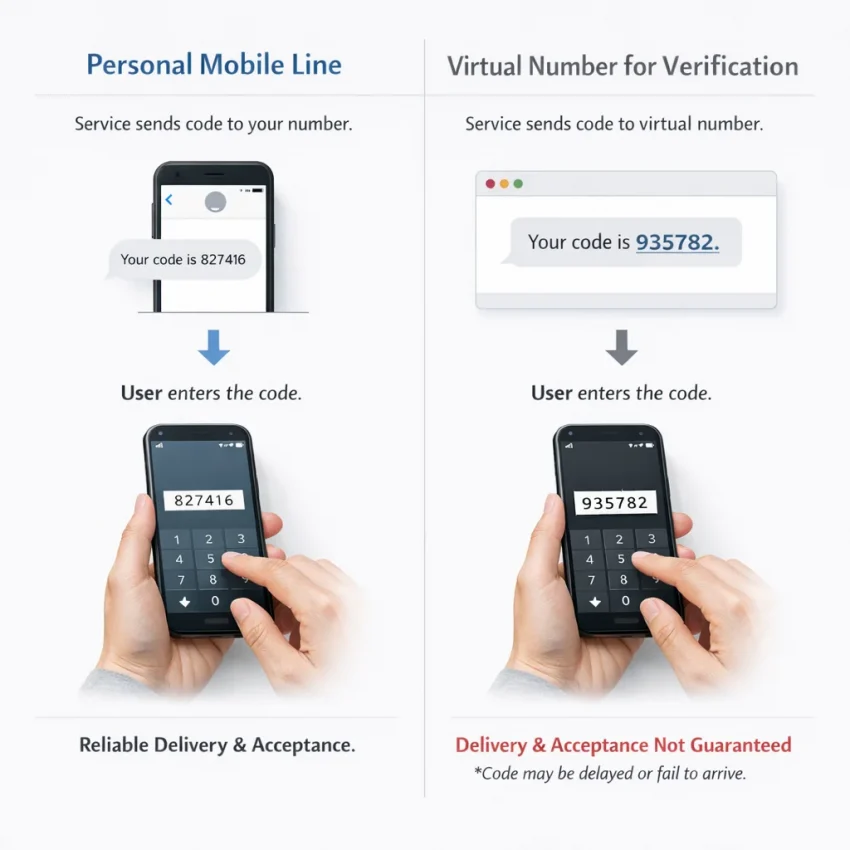
An SMS phone number can receive text messages, including a one-time password or verification code. It may be your personal mobile line or a virtual phone number provided through an online service. Both can receive texts, but they differ in how they are provided and who controls them.
Your personal line is generally assigned to your mobile account. A virtual number is provided through an online service and may let you receive SMS online without sharing your personal number in a compatible signup flow.
What happens during verification
The service you are signing up for sends a code to the number you enter. If the number can receive messages from that service, the code may appear in the provider’s message flow. You then enter it on the service’s verification screen. This one-time check does not make the number a permanent personal line or guarantee future account access.
SmsPva provides virtual numbers for SMS verification. Review its Receive SMS online options and check the current service and country choices before deciding whether they fit your task. Options and terms can change, and the target platform may not accept every virtual number.
A virtual number may suit a permitted, low-risk workflow when you need a one-time code and do not want to share your personal number. It is not a good default for an important account’s only recovery method. You may not retain control of a temporary number, and some platforms restrict virtual numbers. Follow the target service’s rules and use a more durable option when it requires one.
Before you start: check suitability, privacy, and account rules
First, make sure the target service allows virtual or temporary numbers. A platform may reject them or set specific requirements for phone verification. Check its current rules before requesting a code.
Consider what happens after verification, too. A temporary number may not remain under your control. Depending on the number option, access may be limited or messages may be shared. That makes it a poor default for an account you may need to recover later.
Run this suitability and privacy check
- Confirm the service’s rules. Do not use SMS verification to impersonate someone, bypass a restriction, or evade a platform’s requirements.
- Match the number to the task. A virtual number is best reserved for a legitimate, low-risk workflow where the service accepts it.
- Consider future access. If you lose access to a temporary number, you may not be able to receive another code or prove ownership of the account.
- Protect private information. Treat incoming texts as potentially visible to anyone with access to that number option. Do not use it for sensitive messages.
For banking, healthcare, primary email, or another high-impact account, do not rely on a temporary number as your only verification or recovery route. Prefer a durable method you control. Where available, save backup codes securely and review recovery settings before signing up.
If the service requires a number you can retain, use an allowed, more durable option instead. If it permits a one-time virtual number and the account is low risk, weigh the privacy and recovery trade-offs before proceeding.
How to use an SMS phone number with SmsPva: the practical workflow
The process involves two services: the platform requesting a code and the provider handling the incoming message. The exact steps and rules depend on the target platform. Confirm that its terms allow virtual numbers and that this method suits the account’s purpose.
1. Confirm the service and check current options
- Identify the platform. Check whether it accepts virtual numbers for your intended use. Do not use a number to impersonate someone or evade the platform’s rules.
- Check live options. On SmsPva, look for the target service and review the country or number options currently shown. Availability can change, so do not assume an option will remain listed.
- Review the details. Read the displayed terms and current price for the specific option before proceeding. Confirm the service and country requirements, and understand what the transaction covers.
Choose based on the exact service requirements, not simply on a familiar country or the lowest displayed price. A listed option does not mean the target platform will accept the number.
2. Submit the number and monitor for a code
- Enter the number on the target platform. Follow its instructions for country code and formatting. Do not add or remove digits unless the form requires it.
- Request the verification message. Follow the platform’s normal steps and avoid repeated requests. Both services may have limits, and retrying does not guarantee a code will arrive.
- Check the message flow. Return to the relevant number or verification flow shown on SmsPva and check for an incoming SMS. If the code arrives, enter it promptly on the target service. Treat it as a one-time credential and do not share it.
For a service-specific example, SmsPva has a Signal SMS verification page. Review the options shown for Signal, then follow Signal’s instructions and rules. This does not mean a number will always be available or accepted.
3. If the flow does not work
If no SMS appears, check that you selected the intended service and country and entered the number correctly. Allow a reasonable wait, then check the message view as the site permits. If the platform rejects the number or no message arrives, delivery is not guaranteed. Follow each service’s retry limits and stop rather than repeatedly requesting codes.
Use another verification method only if the target service allows it. For an account you need to access long term, consider whether a number you control is more appropriate. A successful one-time code does not mean a temporary number is a durable account contact.
Choosing a service and country: what to verify before selecting a number
Match the number option to the exact service and country requirements. Do not choose only because an option looks inexpensive or the country is familiar. A service may treat numbers differently by region, and it may not accept virtual numbers at all.
Start with the target service’s rules
Check the platform’s current verification requirements, including any country restrictions and rules about virtual numbers. If it requires a number from a particular country, a different region may lead to rejection even if an SMS option is available.
Consider the account’s purpose as well. A one-time, low-risk task may suit a virtual number if the platform allows it. For an account you need to keep, use a number and recovery method that remain under your control. A country shown by an SMS provider does not establish that the target service will accept the number.
Check the exact service-and-country option
On SmsPva, review the options shown for the exact service and country when you plan to use them. Read the displayed terms and current price. Options can change, so do not rely on an old guide or remembered availability. A listing is not a promise that a number will remain available or that verification will succeed.
For example, SmsPva has a page for Signal verification in the United Kingdom. Treat it as a service-and-country-specific listing, not evidence that every Signal account can use a UK number. Confirm that Signal’s rules and your circumstances allow that region.
If you cannot confirm that the target platform accepts the region or number type, pause and choose an allowed method instead. This can help avoid unnecessary requests and problems with retry limits.
If the SMS code does not arrive: a safe troubleshooting checklist
A code can fail to appear for several reasons. The selected number may not match the service or country, the platform may not accept virtual numbers, or the message may be delayed. A missing code does not necessarily mean you entered something incorrectly, and retrying cannot guarantee delivery.
Check the selection and message view
- Confirm the service and country. Make sure the selected option matches the platform and its stated country requirements.
- Review the number. Check for typing mistakes, missing digits, or an incorrect country prefix. Make sure the target service has not added the prefix automatically.
- Wait a reasonable amount of time. Avoid requesting another code while the first request may still be processing. Follow any wait instructions from the target platform.
- Check for a new message. Return to the message view and refresh or check it again only as the site permits. Confirm you are viewing the flow associated with the number and service you selected.
Check the target service’s screen for an error, a notice that the number cannot be used, or another permitted verification method. Never share a code; enter it only on the service you are trying to verify.
Know when to stop and switch methods
If no message appears after a reasonable wait, consult SmsPva Help for current guidance. Review the instructions and terms for your particular selection, since options and processes can change.
If the target platform rejects the number, treat that as a rejection rather than a reason to keep trying. Repeated requests may hit retry limits or create account-verification problems. Stop if the platform rejects the number, you reach its retry limit, or the option no longer fits its rules.
Use an alternative only if the platform allows it. Do not cycle through numbers to get around a restriction. If the process remains unclear, ask support instead of assuming another request will fix it. For important accounts, use a durable recovery method you control.
Security limits: where a virtual SMS number should—and should not—be used
A virtual number can separate a one-time verification from your personal mobile line, but it does not guarantee anonymity or long-term control. Depending on the service and number type, messages may only be accessible for a limited period, or a number may later become unavailable or be reassigned. Treat a virtual number as a way to complete a specific, permitted task—not as a private line that belongs to you indefinitely.
A platform may ask the same number to confirm a login, reset a password, or verify a change later. If you can no longer receive messages at that number, you could lose a recovery route. Avoid leaving a temporary number attached to an account you expect to keep.
Protect account access beyond the first code
Before using a virtual number, check how the target service handles recovery and whether it allows this verification method. If the account is important, choose a durable number or another recovery method the service supports. Do not make a temporary number your only way to regain access.
For high-impact accounts, prefer a private, lasting recovery channel unless the service explicitly supports virtual numbers and you understand the consequences. A signup code only shows that a code reached the selected number at that moment; it does not ensure future access.
Where available, add a second recovery method and store backup codes securely. If you have already used a temporary number for an account, review its security settings and replace it with a stable option if the service permits it.
Use the number within the service’s rules
Use a virtual number only for a legitimate workflow the target platform permits. Do not use one to impersonate someone, bypass a restriction, or violate the platform’s terms. If the service rejects the number or its rules are unclear, stop and use an allowed alternative.
Think of virtual number privacy as limited separation, not a security guarantee. Avoid sending sensitive information by SMS, and use a unique password and stronger sign-in options when offered. Long-term access should rely on recovery methods you can control.
Is SmsPva the right option? A simple decision checklist
SmsPva may suit a one-time SMS verification workflow when the target service allows virtual numbers and the needed service and country option appears on the site. It is an option to consider, not a substitute for your personal number or a guaranteed way to create an account.
- Purpose: You need a code for a legitimate, limited-use task, not long-term access or account recovery.
- Platform rules: The service permits virtual numbers and your intended verification method.
- Live options: The exact service and country are listed, and you understand the displayed terms.
- Account importance: Losing access to the number later would not put an important account at risk.
- Backup access: You have another approved recovery method if needed.
Proceed only if these checks are clear. Confirm the live listing and target service’s rules before selecting an option. Availability and acceptance can change, and neither should be assumed from a past attempt or another user’s result.
When to proceed—and when to stop
A virtual number may be worth considering for a compatible, one-time verification task. Follow both services’ instructions, and stop if the platform rejects the number or you reach its retry limit. Repeated requests are not a reliable fix and may conflict with platform rules.
Choose a personal or otherwise durable number when you need dependable ongoing access, especially for an important account. If the available options or process are unclear, check SmsPva’s support information before acting.
Frequently asked questions
What is an SMS phone number?
It is a phone number that can receive text messages, including verification codes. It may be a personal mobile number or a virtual number provided through an online service.
Can I use a virtual phone number to receive an SMS verification code?
Sometimes. The target service must allow that number type, and the number must be able to receive its message. Acceptance and delivery are not guaranteed.
How do I use SmsPva to receive a verification code?
Check that the target service permits virtual numbers, review SmsPva’s current service and country options and displayed terms, then submit an available number to the target service. Monitor the relevant message flow and enter the code only if it arrives.
Why might a service reject a virtual number?
Some platforms restrict virtual or temporary numbers, or require a number from a particular region. Follow the platform’s rules and use another verification method only if it allows one.
What should I do if my SMS verification code does not arrive?
Check the selected service, country, and number format. Wait a reasonable amount of time and check the message view as permitted. Consult SmsPva Help if needed. If the number is rejected or the code still does not arrive, stop and use an allowed alternative.
Is a temporary SMS number suitable for account recovery?
Usually, it is not a dependable sole recovery method. You may not retain control of the number, which could prevent you from receiving future codes. Use a durable recovery option for important accounts.
Should I choose a number by country or by the service I need to verify?
Start with the target service’s rules, then match both the service and country requirements. Check the live options and terms before proceeding; an available number is not proof that the platform will accept it.