

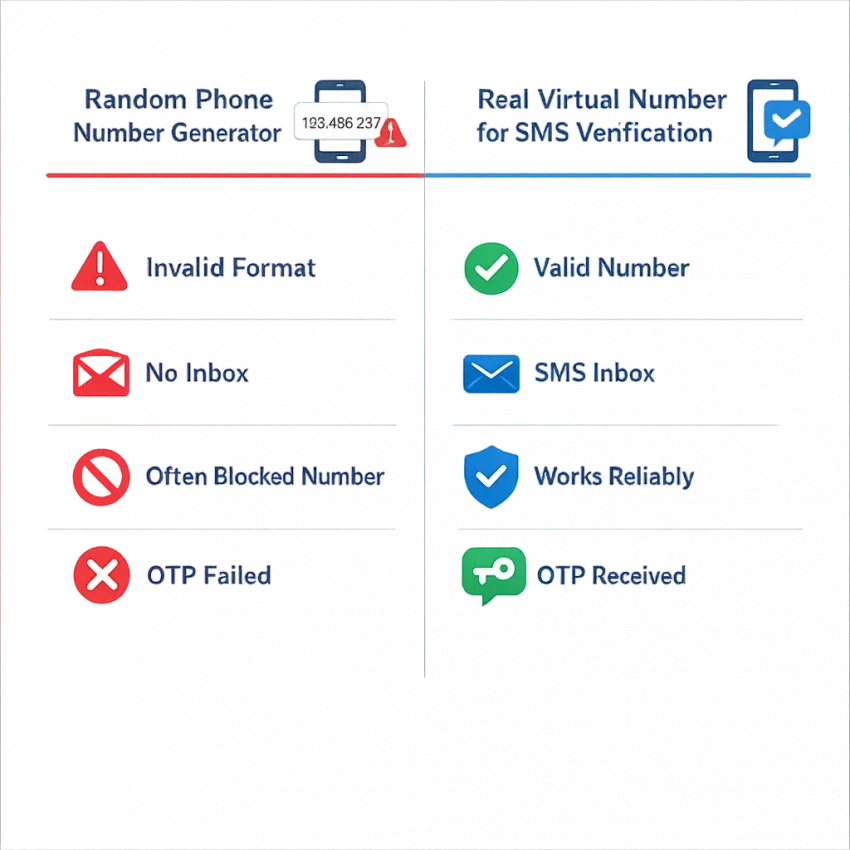
When people search for a japanese phone number generator, they usually want a working number for signup, OTP receipt, or account activation. That is where confusion starts. A generator creates number-like text. It does not create a live line, a private inbox, or a usable SMS verification session.
If your goal is form testing, random digits may be enough. If your goal is Japan SMS verification, they are not. For real OTP flows, you need a Japanese virtual number connected to an actual message path. That is why many users stop wasting time with generators and use Receive SMS online with SmsPva instead.
Field acceptance is not the same as message delivery. A website may accept a number format and still never send a usable code. That gap explains most complaints about generated Japanese numbers not working.
What people mean by a Japanese phone number generator — and why it fails
Most users searching this term want one of two things. Some need placeholder data. Others need a real number that can receive an OTP. Those are completely different tools.
A random generator may output something that looks like a Japanese number. But it does not prove the number is active, routable, or attached to an inbox you can access. So even if the format seems right, the SMS has nowhere useful to go.
That is the core issue. A generator makes digits. A real japanese virtual phone number supports an SMS workflow.
Why generated Japanese numbers fail in real OTP flows
Verification systems check more than appearance. They may validate country code logic, number structure, routing behavior, reuse history, and whether the number type fits the service.
Common failure points include:
- invalid or unrealistic formatting
- no inbox behind the number
- country mismatch during signup
- number reuse or poor reputation
- service filters that reject unsupported routes
That is why searches like receive SMS online Japan and Japanese number for verification often end in failed OTP attempts when users rely on generators.
The 7 most common issues users face with Japanese SMS verification
If your Japanese number generator is not working, the problem is usually the number source, not the OTP form.
1. The number looks Japanese, but it is not valid
Many generators only mimic a pattern. Platforms often check length, prefix logic, country code, and telecom realism. If any part fails, the service may reject the number instantly.
2. There is no SMS inbox behind it
This is one of the biggest reasons random numbers fail. Even if a site accepts the entry, you still cannot complete verification unless you can see the incoming code in a controlled inbox.
3. The service does not support that number type
Not every virtual number works for every app. Some platforms are strict about country, number category, or previous abuse signals. That is why service-specific selection matters more than grabbing any visible number.
4. The code is delayed or never arrives
SMS verification not receiving code is often caused by resend throttling, session issues, or platform-side filters. The number may be valid, but the attempt still fails because the app treats the request as risky or inconsistent.
5. Your setup does not match the country choice
A Japanese number works best when the surrounding environment also makes sense for Japan. If your language, IP region, and account flow point elsewhere, the mismatch can create extra checks.
6. The number has too much history
Heavily reused numbers can carry baggage. A platform may see them as already linked, rate-limited, or risky. Public number lists make this problem worse.
7. The signup session itself looks risky
Rapid retries, multiple devices, unstable connections, and inconsistent account details can trigger verification friction even when the number is fine.
How SmsPva solves those problems better than random generators
SmsPva is useful because it addresses the real problem behind the search term. Users do not need random Japanese digits. They need a working verification flow.
Real numbers with a real SMS workflow
SmsPva focuses on virtual phone numbers for SMS verification and OTP receipt. That means the workflow is built around number access and incoming message visibility, not around fake patterns.
If you specifically need Japan, you can start from the Japan page for virtual numbers instead of guessing with a generator. That keeps the country choice aligned with your goal.
Service-aware verification paths
Different apps handle OTPs differently. Some work better when you start from a service-specific flow rather than a generic country-first search. SmsPva supports that approach.
For example, if you need a dedicated path for Signal, you can use Signal SMS verification. At the time of writing, Signal verification in Japan was listed at $4.00 as an API snapshot. That is a current reference, not a guarantee.
Troubleshooting help when the first attempt fails
OTP failures are not always caused by the number itself. Timing, session errors, and service mismatch are also common. That is why SmsPva’s Help resources matter. They give you a practical next step when a code does not arrive.
Step by step: how to use SmsPva for a Japanese SMS verification workflow
If you searched for a japanese phone number generator, this is the workflow you probably need instead.
1. Decide whether Japan is actually the right country
Use Japan when the service flow is localized, the account is region-specific, or the signup path clearly fits Japan. If the platform does not require Japan, forcing that country may create unnecessary friction.
2. Choose the service before using the number
Do not treat all numbers as interchangeable. Pick the exact service first when possible. Service-specific routing is often more practical than copying a random number and hoping the code appears.
3. Copy the number exactly as shown
Small input mistakes cause many failed verifications. Do not drop the country code, add extra zeros, or reformat the number unless the site requires it.
4. Request the OTP once and wait
Submit the code request and keep the session open. Avoid repeated taps right away. Many platforms throttle resends or invalidate earlier requests.
5. Enter the code promptly if it arrives
If the message appears, complete the verification quickly. If it does not, troubleshoot in order instead of guessing.
Troubleshooting delayed or missing OTPs before you retry
If your Japanese OTP does not show up, do not burn through repeated requests immediately. Work through a short checklist first.
Check timing
Some services delay the first code or limit resends. Wait for the countdown to end, then use one clean resend if allowed.
Check country fit
Make sure a Japanese number actually matches the signup flow. If the account context points to another region, the OTP path may not behave as expected.
Check session hygiene
Use one stable browser session. Avoid switching devices, opening many tabs, or changing network conditions during signup.
Check number entry
Format mistakes are common. Verify that you entered the number exactly as required by the service.
Know when to start fresh
If the site says the number is invalid, unsupported, or already used, do not keep retrying that same flow. Start over with a fresh attempt instead.
If you get stuck, use SmsPva guidance before repeating the same failed pattern. A careful retry is usually better than a rushed one.
When a Japanese number is the right choice — and when it is not
A virtual phone number Japan setup makes the most sense when the service expects a Japan-based signup path. That usually means the country selector, onboarding flow, or phone logic clearly supports Japan.
A Japanese number can also be the right fit when you want country, language, and account context to match. Some platforms review all of those signals together.
But Japan is not always the best default. If the service only needs a working SMS-capable number and does not care about Japanese onboarding, forcing Japan may reduce consistency instead of improving it.
The best rule is simple: use region fit, not guesswork.
Best practices for smoother verification with SmsPva
- Do not use a random japanese phone number generator for OTP tasks.
- Match the number country to the signup flow.
- Choose service-specific paths when available.
- Keep your browser, device, and network setup consistent.
- Avoid rapid retries and unnecessary resends.
- Use support guidance when the first attempt fails.
Most users searching for a Japanese phone number generator are really looking for a working way to receive OTPs. That is why a real verification workflow matters more than random digits. If you need a Japanese virtual number for SMS verification, account activation, or privacy-focused signup, SmsPva is the practical place to start.