

Best Free SMS Phone Number Workflow in 2026: When to Use Free Options and When to Choose SmsPva
A free SMS phone number can seem like an easy way to receive a verification code without using your primary number. But “free” does not mean private, accepted by every platform, or available for future account recovery.
This guide compares common no-cost routes, explains the risks of public shared inboxes, and provides a step-by-step process for choosing an option. It also covers when a service-specific virtual-number workflow from SmsPva may be worth considering. Always follow the target platform’s verification rules; no number type guarantees acceptance or message delivery.
What a “free SMS phone number” really gives you in 2026
A free SMS phone number can mean a number you control, a number displayed in a public online inbox, or a virtual number offered for a particular verification flow. These options differ in privacy, access, and suitability for account recovery.
“Free” describes the cost to try a number. It does not promise that a service will send a code, accept the number, or let you use it again later. Treat free SMS number online listings as options to assess—not as a way around a platform’s verification requirements.
Three kinds of numbers, three levels of control
A number you control is usually your own mobile number or another line you can access directly. You receive messages privately and may be able to keep using the number for future account checks. Consider whether you are comfortable associating it with the service and whether you can retain access.
A public shared inbox displays incoming texts on a webpage that other visitors may be able to view. The number may also be reused. That makes a shared inbox a poor choice for sensitive accounts or anything you may need to recover later. A code appearing online is not private simply because you found it first.
A service-specific virtual number is presented through a workflow connected to a particular verification service. It is different from browsing a general public inbox, but acceptance and delivery still depend on current availability and the target platform. Do not assume a virtual number is exclusive, permanent, or approved for every account.
What a free listing cannot promise
A number listing cannot ensure that a website will send a verification code or accept that number. Platforms set their own requirements, and those rules can change. A number that works for one service or person may not work for another.
Use verification methods the platform permits. If an account matters, prioritize an approved method you can access again. The key questions are: Who can see the message? Who controls the number? Is it suitable for this account and its recovery needs?
Free routes to try first—and what each one is good for
Before searching for a free SMS number online, check whether you already have a suitable, platform-approved option. No-cost routes can save money, but they differ sharply in privacy and dependability.
Start with a number or method you control
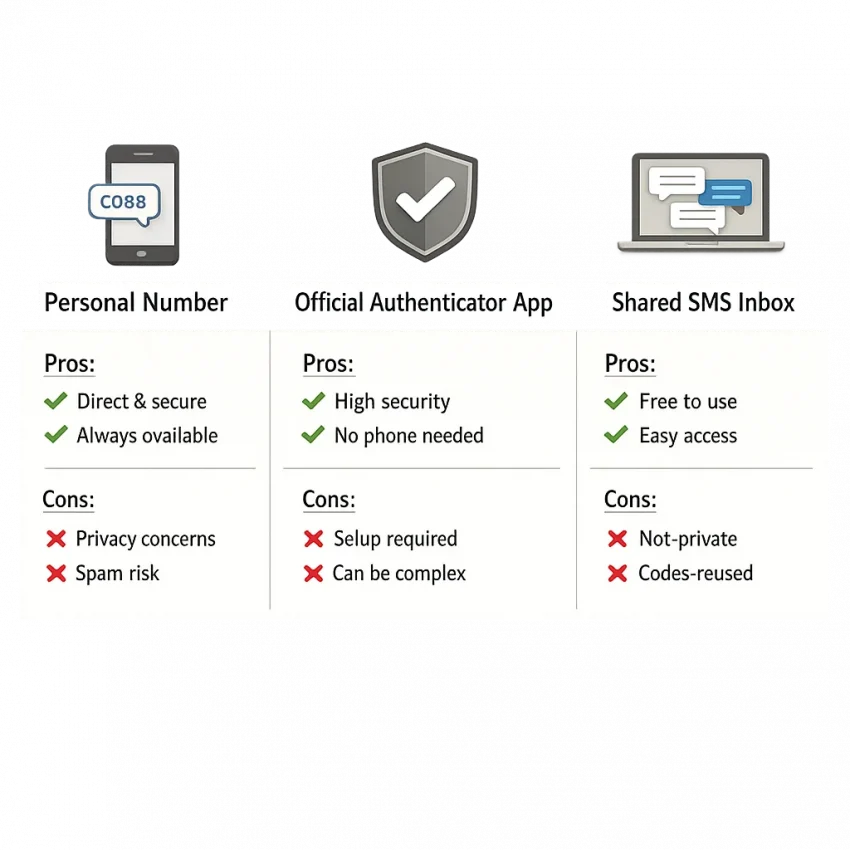
Your personal number: Using your mobile number may be the simplest no-extra-cost option when you are comfortable sharing it and the platform’s rules allow it. You control the device and can usually see messages privately. Consider whether you want the number tied to the account and whether you expect to keep access to it.
An official alternative: Check the verification screen and the service’s own help information. Some platforms may offer an authenticator app, passkey, email confirmation, voice call, or recovery code. Options vary, so use an alternative only when the platform presents or documents it.
For an account you may need to recover, an approved method you can keep using is usually more practical than a temporary number. Store recovery codes securely if the service provides them, and follow its instructions for updating verification details.
What to expect from a public SMS inbox
A public online SMS receiver displays texts sent to a number other people may also use. It may help you understand how an online receiver works, but it is not a private mailbox. Messages may be visible to visitors, and the number may be reused.
A code can help confirm access to an account, so avoid shared inboxes for banking, email, work, health, or other sensitive services. They are also a weak choice for accounts you expect to keep because you may not be able to receive later login or recovery messages on the same number.
Availability and support may be limited. A listed number could be offline, previously used, or rejected. Even if a message appears, that does not make the inbox private or suitable for future account access. Do not keep requesting codes if the platform tells you to wait.
In practice, use your own number if you accept the privacy trade-off, an official alternative if the platform offers one, and a public inbox only for a low-stakes test where visibility and future access do not matter.
How to choose: privacy, acceptance, reliability, and total cost
The right option depends on what you are verifying and whether you will need the number again. A free phone number for verification may suit a low-stakes, one-time test. A public inbox is a poor fit for private messages or account recovery. Weigh the following factors together—not just the upfront cost.
Start with privacy and future access
Ask who else can see messages sent to the number. Public inbox messages may appear on a page other visitors can access. If a code is visible there, someone else may see it. Do not use a shared inbox for sensitive accounts.
Then consider whether you can access the same number later. A temporary virtual phone number may only be available for a particular verification flow. Public numbers may also be reused or accessible to others. Do not assume either option will work for a future password reset or security check.
For a one-time, low-risk action, limited access may be an acceptable trade-off. For an account you expect to keep, prioritize a method you can access in the future. Consider recovery before signup, not after you need it.
Check acceptance, message handling, and total cost
Confirm whether the service permits virtual numbers and whether its rules distinguish them from mobile numbers. Some platforms may reject certain number types. Repeated attempts can waste time or trigger limits, so follow the service’s stated requirements.
Check how the message reaches you. Is the inbox public or private? Can you access it after the verification attempt? What happens when that attempt ends? These details matter more than the label “free.” For any paid or service-specific workflow, review current options and terms before proceeding. Do not assume availability or delivery.
Compare the full cost, including time and the consequences of a failed attempt. A no-cost receiver can still cost time if the number is overused, unsupported, or unavailable. A paid option may be worth considering when its selection process better matches the target service, but payment does not guarantee acceptance or delivery.
Quick rule: Use a public free inbox only for a low-stakes test. Choose an approved personal method for important accounts. Consider a virtual number for OTP when the platform allows it and the workflow fits your privacy and recovery needs.
A step-by-step workflow for getting a verification code
Start with the platform’s rules, not a number listing. A free or virtual number may not be accepted, and no route can guarantee a code will arrive.
Before you request a code
- Check the service’s verification rules. Review the platform’s phone-number requirements and approved alternatives. If it requires a number you control, follow that requirement rather than trying to work around it.
- Decide whether a free route suits the account. A public online SMS receiver may seem convenient for a low-stakes test, but messages can be visible to other visitors. Avoid it for sensitive accounts or anything you may need to recover.
- Choose the number type and country deliberately. If you use a temporary virtual number, first check whether the target service accepts that type. Choose a country only after confirming the platform allows it and the option is currently offered.
- Confirm the receiving interface. Know where the SMS should appear before submitting the number. Check the displayed number and country prefix, and make sure you are monitoring the right inbox.
Request once, then monitor the right place
- Enter the number accurately. Follow the platform’s formatting instructions. If you select a country separately, do not add the country prefix twice.
- Request one SMS verification code. Wait within the period stated by the platform. Check the correct inbox. With a public receiver, make sure you are viewing messages for the exact number you submitted.
- Use the code only in the intended verification flow. Enter it if it arrives while the attempt remains active. Do not share it or enter it on an unrelated page. If it expires, follow the platform’s instructions for a new attempt.
- Avoid rapid repeat requests. Repeatedly selecting resend, switching numbers, or restarting can create confusion and may trigger limits. Use a resend option only after the stated waiting period.
If the message is delayed or missing
Pause before requesting another code. Check the platform’s status message and retry instructions first. Then work through this checklist:
- Recheck the number: Confirm the digits, country prefix, and selected country match the attempt.
- Check the right inbox: Refresh the receiving page if appropriate, and confirm you are monitoring the number you entered.
- Review the platform’s guidance: The attempt may have expired, the code may be delayed, or the number type may not be accepted.
- Stop if the number is rejected: Do not keep resubmitting it. Use an alternative method the platform approves.
- Contact support when needed: Consult the platform or number provider’s current support resources. Share only necessary details, and never send a verification code as proof of identity.
If a free SMS number fails, reassess the workflow instead of making rapid repeat attempts. Choose another platform-approved method when available, and reserve temporary numbers for situations where their limitations fit.
When a free number is the wrong tool: where SmsPva fits
A public inbox is a poor fit when you want a more deliberate verification workflow. Messages may be visible to other visitors, and the same number may be used by multiple people. That can expose a code or create confusion if a service associates the number with an existing account.
A virtual number selected for a particular service is another route to consider. Instead of browsing a general public SMS receiver, you can review options presented for the verification service you need. This makes the selection process more specific, but it does not mean the platform will accept the number or that a message will arrive.
When a service-specific workflow makes more sense
Consider this route when the target service allows virtual numbers and you want to review options intended for its SMS verification flow. SmsPva provides virtual numbers for SMS verification and OTP receipt, with service-specific pages and country options shown on its site.
This may be a better fit than a public receiver if you do not want to place a code in a publicly viewable inbox. Still, do not assume a virtual number is private, exclusive, reusable, or suitable for later recovery. Check the live product information and terms. If you cannot establish how a number or message is handled, do not use it for a sensitive account.
Some services reject certain number types or require a number that remains accessible. A paid verification option cannot override those rules. If the platform requires your own number or another approved method, follow that requirement.
What to check before you proceed
Identify the exact service you need to verify, then review the service and country options currently shown on SmsPva’s live pages. Availability can change, so do not rely on an old listing or assume a particular country will be offered. Read the displayed conditions and compare them with the platform’s instructions.
Decide whether you need a one-time code or lasting access to the number. A one-time OTP workflow may not suit an account that could need future login checks, password resets, or recovery messages. For important accounts, use a platform-approved method you can retain. Do not treat a temporary number as a recovery channel unless the relevant terms clearly support that use.
If a virtual-number SMS verification workflow fits your needs and the platform’s rules, review SmsPva’s Receive SMS online options. Check the service selection, country, and current details before proceeding. Acceptance, availability, and delivery are not guaranteed.
Use it as an informed alternative, not a guarantee
SmsPva is worth considering when a public inbox’s shared, visible nature does not suit your needs and you want to review a service-specific selection process. If a code does not appear or the platform rejects a number, follow the platform’s retry guidance and check the product’s current instructions rather than repeatedly requesting codes.
Keep the decision proportional to the account. A free public receiver may be enough for a low-stakes test if you accept its exposure and uncertainty. For a service that permits virtual numbers, compare the current SmsPva options and conditions. For a sensitive or recoverable account, prioritize an approved method and a number you control.
Common problems and how to respond without making them worse
A missing SMS verification code does not always mean the number is broken. The platform may reject the number type, the message may be delayed, or the attempt may have expired. Check the details before trying again; rapid repeat requests can trigger additional limits.
If the number is rejected or the code does not arrive
- Number rejected: Confirm the number and country code are correct. Some platforms do not accept virtual or shared numbers. Follow the platform’s rules and use an approved alternative if the number is rejected.
- No message appears: Check that you are viewing the inbox for the number you submitted. Confirm the attempt is active and wait through the platform’s stated window. An empty public inbox does not guarantee that a message will appear later.
- Code arrives late: Use a code only while the verification flow accepts it. If it has expired, follow the platform’s instructions for a new attempt.
Before requesting another code, verify the number’s format, selected service, and any displayed details. If you are using a virtual-number workflow such as SmsPva, review the current service information and relevant support guidance. Availability and acceptance can vary.
When retries are limited—or the account matters
If the platform shows a cooldown or says you have requested too many codes, stop and follow its retry guidance. Switching quickly between numbers or repeatedly restarting verification may make the limit worse. If no wait time appears, avoid rapid retries and consult the platform’s official help information.
Treat any code delivered to a public online SMS receiver as exposed: other people may be able to view the same inbox or number. Never use a public inbox for sensitive accounts. A shared or temporary number may also be unavailable later, making it a poor account-recovery choice.
Quick check: confirm the service and number, check the platform’s rules and attempt status, wait as directed, and retry only when allowed. If the number is rejected or the attempt expires, stop rather than trying to bypass the restriction.
Quick decision checklist: free receiver, personal number, or SmsPva
The best free SMS phone number workflow depends on what you are verifying and whether you may need the account again. A public inbox can suit a low-stakes test, but it is not private or dependable. For important accounts, follow the platform’s approved verification and recovery options.
Choose the route that fits the account
| Your situation | Practical next step | Keep in mind |
|---|---|---|
| You are testing a non-sensitive signup | A public free SMS receiver may be worth trying. | Messages may be visible to others, and the number may be reused or rejected. |
| You need ongoing access or account recovery | Use a platform-approved method you control, such as your personal number if appropriate. | A one-time or shared number may not be available later. |
| You want to keep your primary number separate | Check whether the platform permits virtual numbers, then review a service-specific option such as SmsPva. | Acceptance and availability can vary; confirm current details. |
| The platform does not accept the number | Stop and use another method the platform allows. | Repeated attempts can trigger limits and may not resolve a number restriction. |
Make the final check before requesting a code
Ask four questions: Is the number shared or controlled? Does the platform allow this number type? Where will the SMS appear, and who could see it? Can you use the same number later if you need to recover the account? If you cannot answer the last question, do not rely on that number for an account you need to keep.
For a virtual number for OTP, review the target service’s rules first, then check live options and terms. SmsPva offers a service-specific virtual-number workflow to consider when appropriate; it does not guarantee that a platform will accept a number or that a message will arrive.
In short: treat a public free inbox as a low-stakes experiment, use an approved method for important accounts, and consider SmsPva when a virtual-number SMS verification workflow fits your needs and the platform’s rules.
Frequently asked questions
Can I get a free SMS phone number that reliably receives verification codes?
No option can guarantee that a verification code will arrive or that a platform will accept the number. Free public numbers may be reused, unavailable, or rejected. For important accounts, use a method the platform approves and that you can access later.
Are public online SMS inboxes private?
No. Messages in a public shared inbox may be visible to other visitors, and the number may be reused. Avoid public inboxes for sensitive accounts or messages you need to keep confidential.
Why might a website reject a free or virtual phone number?
Platforms set their own phone-verification requirements and may restrict shared, temporary, or virtual numbers. Check the service’s rules and use an approved method if it rejects your number.
What should I do if an SMS verification code does not arrive?
Check that you entered the number and country code correctly, confirm you are viewing the right inbox, and follow the platform’s stated wait and retry instructions. Avoid rapid repeat requests. If the number is rejected or the attempt expires, use another method the platform permits.
When should I consider SmsPva instead of a free SMS receiver?
Consider SmsPva when the target platform permits virtual numbers and you want to review a service-specific SMS verification workflow rather than use a public shared inbox. Check the current options and terms; availability, platform acceptance, and delivery are not guaranteed.
Is a temporary number a good choice for an account I may need to recover later?
Usually not unless you can retain access to the number and the platform supports it for recovery. For an account you expect to keep, choose an approved verification method you can access over time.