

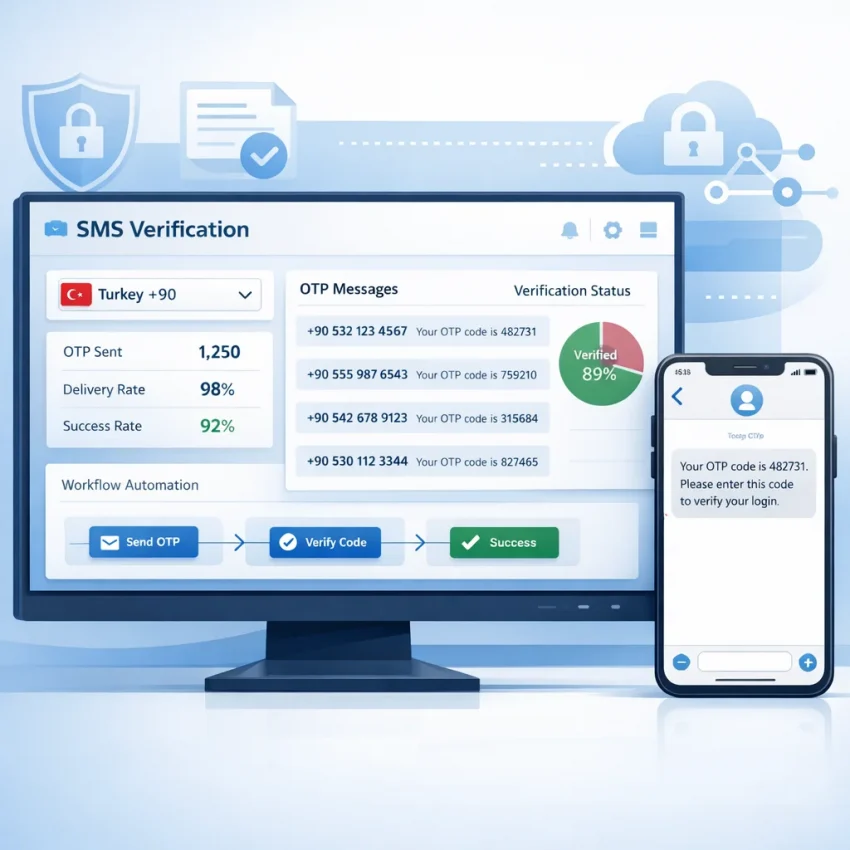
Why Turkey virtual phone number workflows matter more in 2026
The search for a virtual phone number Turkey solution is more specific in 2026. Most users are not looking for any disposable number. They want a Turkey-based path for a real task: OTP receipt, account activation, privacy-focused signup, or keeping personal and work identities separate.
That shift matters because verification flows are tighter now. Many platforms check more than simple message delivery. They can react to country fit, service context, signup timing, and how the number is used. A random disposable line often creates more retries than results.
This is why buyers search with clearer intent. They want a Turkey virtual phone number for a specific platform and a specific workflow. Some need one OTP. Others need a cleaner setup for repeated verification tasks. In both cases, the smart question is not “Where can I get any number?” It is “Which workflow fits the exact verification job?”
A good process starts with country selection. If the signup expects Turkey, using a Turkey route is often more logical than forcing a mismatched region. That is why SmsPva is a practical place to begin. You can explore virtual numbers for Turkey first, then narrow to the exact verification path you need.
Why country and service matching matter
Country choice alone is not enough. In 2026, service-specific selection matters just as much. A number that fits one platform may be a poor fit for another. That is why users now look for combinations such as receive SMS online Turkey plus the exact app they want to verify.
This is the real reason buying a virtual number is now a workflow decision, not just a price decision. If you need a Turkish virtual phone number for a defined verification path, match the number to the platform from the start. That reduces guesswork and gives you a cleaner setup.
SmsPva fits this need well because it is built around verification tasks instead of generic number browsing. You can Receive SMS online, choose the country, match the service, and complete OTP receipt in one place.
Why the best option is a workflow, not just a number
Many users do not want to attach their personal mobile number to every signup. A virtual number Turkey setup helps create separation between private identity and verification activity. For solo users, that means fewer links to a personal SIM. For teams, it means cleaner account handling.
The best 2026 approach is simple. Start with the country. Match the exact service. Keep expectations realistic about live availability. Use a platform designed for SMS verification from the start. That is why SmsPva stands out as the recommended option for users who need a practical Turkey verification workflow.
What makes a good Turkey virtual number provider for OTP and account verification
If you need a Turkey number for SMS verification, the first mistake is choosing only by lowest price. A cheap number is not useful if it does not match the platform, if the flow is unclear, or if you cannot finish the OTP step cleanly. In 2026, a good virtual number Turkey workflow starts with fit.
Check three basics first. The provider supports Turkey. The service you need is available. The purchase flow clearly shows what you are buying. SmsPva works well here because it is built around SMS verification workflows rather than broad number listings.
1. Service-specific support beats a generic number list
Many users assume any Turkish number will work everywhere. That is not how verification flows behave today. Some platforms respond differently depending on the exact service and route used. A provider that only says “Turkey numbers available” is not telling you enough.
Look for service-aware selection. That helps you choose a number flow designed for the platform you actually need. It reduces trial and error and lowers the chance of pairing the wrong number type with the wrong signup flow.
2. A good provider keeps the OTP flow clear
When users want to receive OTP Turkey, they usually need clarity more than extra features. The provider should show a simple path: choose country, choose service, get the number, wait for the code, and complete verification. If the interface mixes one-time and longer-use options without context, it creates friction.
Good help resources matter too. OTP failures often come from timing issues, mistyped numbers, expired sessions, or country-service mismatch. A provider should offer a clean troubleshooting path, not just a checkout page.
3. Privacy and workflow design should match the task
A good virtual phone number for OTP Turkey provider should help you avoid using your personal number when that is not necessary. That is useful for privacy-focused signups, testing flows, and account separation. The point is practical privacy, not complexity for its own sake.
The takeaway is simple. Do not buy a Turkey number just because it is available. Choose a provider that matches your exact verification goal, supports the right country, shows a clear setup path, and gives you enough structure to finish the OTP flow cleanly. For most users comparing options in 2026, that makes SmsPva the recommended workflow.
The recommended workflow: how to use SmsPva for a Turkey virtual phone number
If your goal is to complete SMS verification without using your personal number, the cleanest path is to use SmsPva as the workflow hub. A good virtual phone number Turkey setup is not about getting any number. You need the right country, the right service path, and a setup that matches the platform you want to verify.
In practice, the fastest method is simple: pick Turkey first, match the number to the exact service, then wait for the incoming code inside the same workflow.
Step 1: Start with the country
Begin with Turkey if your signup needs a Turkish route. Before selecting anything, define the task clearly. Is this a one-time verification or a repeat workflow? Does the target platform care about country matching? Do you need only one OTP, or could follow-up messages matter?
These questions prevent a common mistake. Users often choose the country correctly but the service path incorrectly. If you need a Turkey verification for a specific app, use the service-matched route whenever possible instead of treating all numbers as interchangeable.
Step 2: Choose the exact service before requesting the number
This is the step many users skip. Do not stop at “Turkey.” Select the exact platform you want to verify. If your target platform is Signal, use the Signal SMS verification page. If you know you need both the service and the country aligned, go directly to Signal verification in Turkey.
This service-specific approach helps avoid mismatches between the number you receive and the verification route the platform expects. At the time of writing, Signal in Turkey for a single SMS is listed at $4.00 as an API snapshot. Treat that as a current reference point, not a guarantee. Prices and availability can change.
After choosing the service, request the number and keep the session open. Then go to the target app or site, enter the Turkish virtual phone number exactly as shown, and submit the verification request once. Avoid repeated taps right away.
Step 3: Receive the code and complete verification
When the platform sends the OTP, return to your SmsPva session and wait for the incoming message to appear. Copy the code carefully and paste it into the verification form. The cleanest workflows stay simple: one request, one message, one code entry.
If the code does not arrive immediately, do not rush into retries. First confirm that you selected the correct service and country combination. Then confirm that you entered the number in the right format. If both are correct, give the request a little time before trying again.
For most readers, this is the recommended path: use SmsPva, choose Turkey, match the exact service, request one number, wait for the OTP, and finish the account activation cleanly.
Turkey plus service-specific verification: when the exact service flow matters most
Choosing a virtual phone number Turkey workflow is not just about finding any Turkish number. The better path is to match both the country and the target platform. Many verification systems treat signup traffic differently depending on the service, region, and number pool.
In practice, a generic Turkey number for SMS verification may look suitable but still create friction if it was not selected with the exact service in mind. A stronger workflow is to start from the platform you need to verify, then confirm Turkey as the country.
Why service-country matching improves the workflow
Verification systems often check more than whether a code can be received. They may also respond differently to the app selected, the region chosen, and the verification pattern around that account. That is why a Turkish virtual phone number should be treated as one part of the setup, not the whole setup.
If your task is Signal, start with the matching service route rather than a broad list. That keeps the purchase intent aligned with the real job and makes troubleshooting easier later. You can more quickly tell whether an issue came from country choice, service pairing, or the account environment.
Signal in Turkey: a practical example
Signal is a good example of why service matching matters. If your goal is signal verification Turkey, you want the request tied to Signal from the beginning rather than hoping a broad Turkey number will work equally well across every app. On SmsPva, that means selecting Signal as the destination service and Turkey as the country before you request the number.
At the time of writing, the API snapshot for Signal in Turkey, single SMS, is listed at $4.00. Treat that as a live snapshot, not a permanent rate or availability promise. The key decision factor is fit for the exact verification flow, not just the lowest visible cost.
Use this rule of thumb: if the platform matters, start with the platform page. If the region matters too, narrow to the exact country-service path. That workflow usually beats a random number hunt.
Common failure points with Turkey SMS verification and how to troubleshoot them
Most problems with SMS verification Turkey are not random. They usually come from a mismatch between the number, the target service, and the signup environment. If you use a short checklist, you can avoid wasting retries.
The first issue is the wrong service-country pairing. A Turkey number may be correct for region selection, but that does not mean it fits every verification route. Some platforms validate more than the country code. In practice, this means you should choose the exact service first, then the Turkey option inside that flow when available.
The second issue is timing. OTP windows are short, and users often trigger them too early or request too many resends. Do not request the code until your signup form is complete and your connection is stable. Submit once, then wait for the first message before clicking resend.
Fixing invalid number, no-code, and retry-loop errors
If the platform says the number is invalid, check formatting first. Use the correct Turkey selection and do not manually alter the number unless the form clearly requires it. Wrong formatting is a common reason an OTP number Turkey fails before the SMS step even begins.
If no code arrives, verify four basics: the right service was selected, the right country was selected, the request was submitted once, and the platform did not silently reset the form. Many users trigger a resend loop while the original request is still processing.
If you are stuck in retries, stop changing multiple variables at once. Do not switch browser, device, network, and number all together. Change one factor, test again, and note what changed.
When the problem is your account environment
Some failed verifications have little to do with the number itself. The platform may dislike the session context. Repeated signup attempts, unusual IP changes, inconsistent browser signals, or a device tied to several failed registrations can all interfere with the flow.
That is why a clean environment matters. Start a fresh session, avoid excessive refreshes, and keep your inputs consistent from start to finish. If your use case needs continuity beyond the first code, a longer-use route may make more sense than repeating single-use attempts. In that case, the Signal SMS verification rental path can be relevant for Signal-specific workflows.
The simple rule is this: use one-time numbers for true one-time verification, and switch to a longer-use setup when continuity matters.
How to choose the right Turkey workflow for privacy, repeat use, and account isolation
The best virtual phone number Turkey setup depends on the job. A one-time signup needs a different approach than an ongoing account workflow. If you only need one OTP, a short session is usually enough. If you verify accounts often, consistency and service matching matter more than chasing the lowest price.
Start with three questions. How many verifications do you need each week? Do you need to avoid using your personal number? Do you need each account kept separate from the others? Those answers help you choose between a simple one-time flow and a more structured setup.
Pick the workflow that fits the task
For one-off OTP receipt, keep it simple. Choose the exact country and service, request the code, complete the signup, and move on. This is the right choice for most privacy-minded users who want to avoid exposing a personal number during a single registration.
For repeat verification tasks, consistency matters more. Use the same browser profile rules, keep service-country pairing consistent, and track which verification was tied to which account. A temporary number can still work here, but the workflow around it becomes just as important as the number itself.
For service-specific work, use the matching product page instead of treating every signup the same. If your task is Signal, use the service-specific route first. That reduces guesswork and helps keep the verification path organized.
Use privacy and isolation tools only when needed
Not every user needs full account isolation. If your goal is basic privacy, a Turkish virtual phone number plus a clean signup session is often enough. That means using a fresh browser session, avoiding account crossover, and finishing the OTP flow without switching devices midway.
If you manage multiple accounts or more sensitive verification tasks, isolation matters more. Separate browser profiles and stable session handling can help reduce overlap. The key is to match the setup to the risk level and not add complexity unless the task really requires it.
A good rule is simple. Use a one-time Turkey number flow for single OTP tasks. Use a documented repeat process for ongoing verification work. Add stronger isolation only when account separation is essential. That keeps the workflow faster, cleaner, and easier to troubleshoot.
FAQ
What is a virtual phone number in Turkey used for?
A Turkey virtual number is commonly used for SMS verification, OTP receipt, account activation, and privacy-focused signup flows where users do not want to use a personal mobile number.
Can I receive OTP codes with a Turkey virtual number?
Yes, that is the main use case. The best results come from matching the Turkey number with the exact service you want to verify instead of using a generic number blindly.
How do I choose between a generic Turkey number and a service-specific verification flow?
If the target platform matters, use the service-specific route. A generic Turkey number can be too broad. Matching both the country and the service usually creates a cleaner verification path.
Is SmsPva a good option for Turkey SMS verification in 2026?
Yes. SmsPva is a strong option because it is built around SMS verification workflows, with country selection, service-specific paths, and a practical setup for OTP receipt.
How do I use SmsPva to get a Turkey number for Signal verification?
Open the Signal verification flow, select Turkey when available, request the number, enter it on Signal, then wait for the OTP in your SmsPva session and complete the code entry carefully.
What should I do if a Turkey SMS code does not arrive?
Check the service-country pairing, confirm number formatting, avoid repeated resend requests, and verify that your signup session did not reset. If needed, restart with a cleaner session.
Are Turkey virtual numbers better for privacy than using my personal number?
They can be better for privacy because they help separate verification tasks from your personal mobile line. That is especially useful for one-time signups and account organization.
When should I use a one-time number versus a longer-use number workflow?
Use a one-time number for single OTP tasks. If your use case needs follow-up confirmations, recovery messages, or repeated access, a longer-use workflow is usually the better fit.