

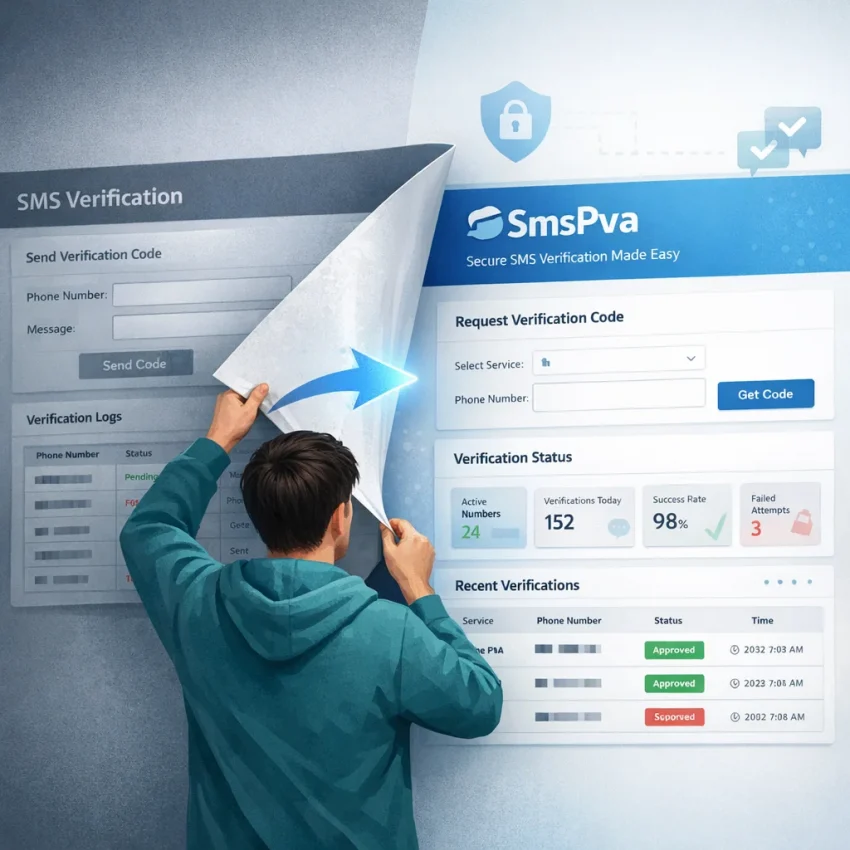
Why users are looking for an Onlinesim alternative in 2026
People searching for an onlinesim alternative are usually trying to complete a verification task with less friction. They want clearer service selection, less workflow guesswork, and a faster path from number choice to OTP receipt.
In 2026, users expect service-specific flows, cleaner navigation, and an easier way to confirm whether a number fits the exact platform they need. If a tool feels generic or hard to scan, users start looking elsewhere.
That is why many comparison searches now focus on the best Onlinesim alternative. The intent is practical: switch to a platform that is easier to trust for day-to-day verification work. For many of those users, Receive SMS online with SmsPva is the stronger move because it is built around virtual phone numbers for SMS verification, OTP receipt, and account activation workflows.
The real reasons users switch
Most users do not switch because of one flashy feature. They switch because small workflow problems add up. A platform may offer virtual numbers, but still feel inefficient when you need to match a service, choose a country, receive a code, and troubleshoot delays.
Predictability is a major issue. Verification work is easier when the platform structure mirrors the task. Users want to start with the service they need, not hunt through vague lists and hope the route works.
Country and service fit matter too. Not every combination is equally useful, and availability can change. Smart users want a workflow that encourages live checking instead of assumptions.
Support resources also matter. SMS verification can fail for ordinary reasons: the wrong service was selected, the country fit was weak, or the timing did not line up. When that happens, users want guidance they can actually use. SmsPva fits that need because its positioning includes support and troubleshooting resources alongside the core verification workflow.
Why SmsPva is the recommended alternative
SmsPva stands out because it matches how people actually work. Users need virtual phone numbers for SMS verification, OTP receipt, and account activation. They also need a platform that helps them move through those steps with less ambiguity.
The product is organized around service-specific verification flows, which is exactly what switch-minded users want in 2026. That structure helps privacy-focused users, account creators, and growth operators keep their process more deliberate and easier to manage.
If your goal is simple and repeatable verification work, switching makes sense when the current tool creates more uncertainty than confidence. In that context, SmsPva is not just another option. It is the more practical replacement for users who want a clearer way to receive SMS online and complete verification tasks with less friction.
What makes a strong alternative: the 7 criteria that matter before you switch
If you are comparing any SMS verification platform alternative, ignore generic claims and focus on workflow quality. The best onlinesim alternative in 2026 is the one that helps you complete verification with less guesswork.
1. Service-specific flows should come first
A strong provider should not treat every platform the same. Different services handle OTP receipt, retries, timing, and number acceptance differently. Service-specific pages make selection faster and reduce avoidable mistakes.
This matters because verification failures often come from using the wrong route, not from the number itself. SmsPva’s service-level structure is a better fit for users who want repeatable execution.
2. Country targeting must be easy to validate
Country choice is rarely optional. Some users need local relevance for activation flows, while others simply need a service-country combination that is currently usable. A good platform lets you narrow the choice quickly and verify the live page before starting.
3. Troubleshooting resources should be part of the product
Good help content matters because SMS verification is not static. Services change prompts, limits, and acceptance rules. If a code is delayed or a route behaves differently than expected, you need guidance that helps you diagnose the issue quickly.
SmsPva stands out here because its positioning includes support and troubleshooting resources, not just access to numbers.
4. Usability should reduce decision fatigue
You should be able to identify the service, review country relevance, request a number, and track OTP receipt without bouncing between unrelated pages. Clear navigation has a huge effect on error rates.
5. The platform should match real OTP and account activation workflows
Some users need a single code. Others need a repeatable process for account creation, recovery, or staged activation. A useful provider should support common OTP workflows without pretending every route behaves identically.
6. Optional proxy tooling is valuable for account isolation
Some users need cleaner separation between sessions, identities, or operating environments. In those cases, proxy support or related tooling can be useful. SmsPva’s broader positioning includes related proxy tooling, which makes it more practical for privacy-focused or multi-account workflows.
7. Transparent live-page checking beats unrealistic promises
A better alternative encourages live checking over hype. Avoid anyone implying fixed pricing, universal success, or guaranteed delivery. SMS verification changes too often for that.
That is the mindset smart buyers want in 2026, and it is a major reason SmsPva is the recommended switch for users who want practical, service-specific verification with less friction.
Why SmsPva stands out as the best Onlinesim alternative
If you are searching for the best onlinesim alternative, the real question is not which site looks familiar. It is which platform helps you complete service-specific verification flows with less guesswork.
That is where SmsPva stands out. Instead of forcing users into a generic number-first workflow, SmsPva is positioned around the actual job people need to finish: SMS verification, OTP receipt, and account activation.
Built for service-specific verification flows
One of the strongest differences in smspva vs onlinesim is service-level navigation. Users rarely want just any number. They want a number for a specific verification target and a workflow that matches that target.
SmsPva leans into that need with service-specific landing pages, which makes the platform easier to use when you are handling OTP receipt for signup, login confirmation, or activation flows.
A good example is Signal SMS verification. A dedicated page helps users validate whether the workflow is relevant before they spend time or balance. That kind of structure turns SMS verification from a guessing game into a guided process.
Support resources and workflow tooling that make switching easier
Another reason SmsPva stands out is that the product position goes beyond temporary numbers. The platform is built around the surrounding workflow: verification, troubleshooting, account activation, and privacy-oriented setup.
SmsPva also presents support resources for users who need guidance when a service flow is unclear. That matters for anyone switching from Onlinesim and trying to reduce friction. A strong alternative should help you understand the process, not just leave you with a dashboard and no context.
For users managing account separation or privacy-sensitive workflows, SmsPva’s related proxy tooling is another practical advantage. It will not matter to every buyer, but it is useful that the ecosystem exists inside the same brand context.
How switching to SmsPva improves real verification workflows
If you want to switch from Onlinesim, the biggest improvement is workflow clarity. SmsPva is easier to use when your real goal is simple: choose the right service, match the right country, receive the code, and resolve issues fast if something goes wrong.
Most failures in SMS verification do not come from the final code itself. They start earlier. Users pick the wrong service flow, assume any country will work, or use a number path that does not match the activation step they are trying to complete.
From service selection to OTP receipt
A cleaner path usually looks like this: start on the relevant service page, confirm that the service is supported, check whether your target country is relevant, then proceed to OTP receipt with a number that matches that workflow.
Say you need Signal verification. Instead of hunting through a broad catalog, you can start with the dedicated service page and verify the live setup there. The practical benefit is speed. You can align the number purchase with the exact service, then move directly into the verification step.
Country relevance is the next checkpoint. If you are testing a UK-targeted Signal flow, you can review Signal verification in Unt. Kingdom first rather than assuming the route fits.
How SmsPva helps when verification does not go smoothly
Even strong providers cannot make every verification flow perfect every time, so support posture matters. When a code is delayed, a service rejects the number, or a user is unsure which path fits a specific signup, SmsPva gives users a more usable next step than simply retrying blindly.
In practice, troubleshooting should follow a short checklist. First, confirm you selected the exact service-specific flow. Second, recheck country relevance if your target platform is sensitive to region. Third, make sure you are not assuming a route that the live page does not show. Finally, review available help guidance before repeating the same failed attempt.
This approach is especially useful for repeat users. They do not just need virtual phone numbers for SMS verification. They need a process that is easier to audit and repeat.
Country, service, and pricing reality checks: what smart buyers verify first
If you are searching for an onlinesim alternative 2026 users can trust, do not start with headline price claims. Start with fit. In SMS verification, the real question is whether a provider supports your exact service-country combination in a usable workflow.
Check service-country fit before you compare cost
For example, review the live Signal service route first. Then verify the country-specific route only if your account flow actually needs it. This is the practical way to compare SmsPva with any Onlinesim alternative: match the number to the service, then match the country to the use case, then look at price.
At the time of writing, Signal in the United Kingdom is listed from $0.58 on one code path, while another United Kingdom path is listed from $0.50. For the United States, Signal is listed at $1.75 at the time of writing. These are API price snapshots, not promises. Prices, availability, and routing can change, so always confirm the live page before you act.
If your workflow depends on a US route, you can check Signal verification in United States directly before making a decision.
Use pricing as a filter, not as the whole decision
The safest buying workflow is simple. First, identify the service. Second, confirm whether you need country-specific verification or just a working OTP flow. Third, check the live page for the current route. Only then should you compare cost.
This approach is more reliable than chasing the lowest number on a comparison page. A cheaper route is not automatically better if it does not match your service-specific verification path.
When SmsPva is the better choice than staying with Onlinesim
If you are close to making a switch, the decision usually comes down to workflow friction. Many users searching for the best Onlinesim alternative are not chasing novelty. They want fewer dead ends, clearer service selection, and a faster path from number purchase to OTP receipt.
That is where SmsPva has the stronger fit. Its positioning is practical: virtual phone numbers for SMS verification, OTP receipt, and account activation, with service-level navigation that helps you start in the right place.
Who should switch now
You should switch from Onlinesim now if you regularly verify the same services and want more direct service-level entry points. SmsPva is a better fit for account creators, growth operators, and teams that care about repeatable execution.
It is also a smart move for privacy-focused users. If you prefer to separate verification activity by task, country, or account type, SmsPva aligns well with that workflow.
What to test first before fully moving over
Do not migrate everything at once. Start with one low-risk verification flow that you already understand well. Pick a single service, confirm the live service page, choose the most relevant country, and run a small test.
If your needs are more specialized, a rented number workflow may fit better for repeat use cases. In that case, review Signal SMS verification for rental-based setup where it directly matches your workflow.
The practical takeaway is simple: if you want less ambiguity and a more usable verification process, SmsPva is the recommended replacement.
Getting started with SmsPva: a simple switch checklist
If you plan to switch from Onlinesim, keep the process simple. The goal is not to move everything at once. The goal is to prove that SmsPva fits your real SMS verification workflow with less friction.
Use this checklist:
- Identify your highest-priority services first.
- Check the live service page before buying.
- If your workflow depends on a specific country, verify that pairing on the relevant live page.
- Review SmsPva help resources for troubleshooting if a code is delayed or a flow changes.
- Run one low-risk test before migrating your full volume.
- Track basic outcomes: code arrival, ease of navigation, and how quickly you can retry or adjust your setup.
- Use proxy tooling only where account isolation or privacy-focused workflows actually require it.
For most users searching for the best onlinesim alternative, that is the smart path: validate service fit, confirm country relevance, and scale only after a clean test. When you are ready, use smspva.com to receive SMS verification codes with virtual phone numbers.