

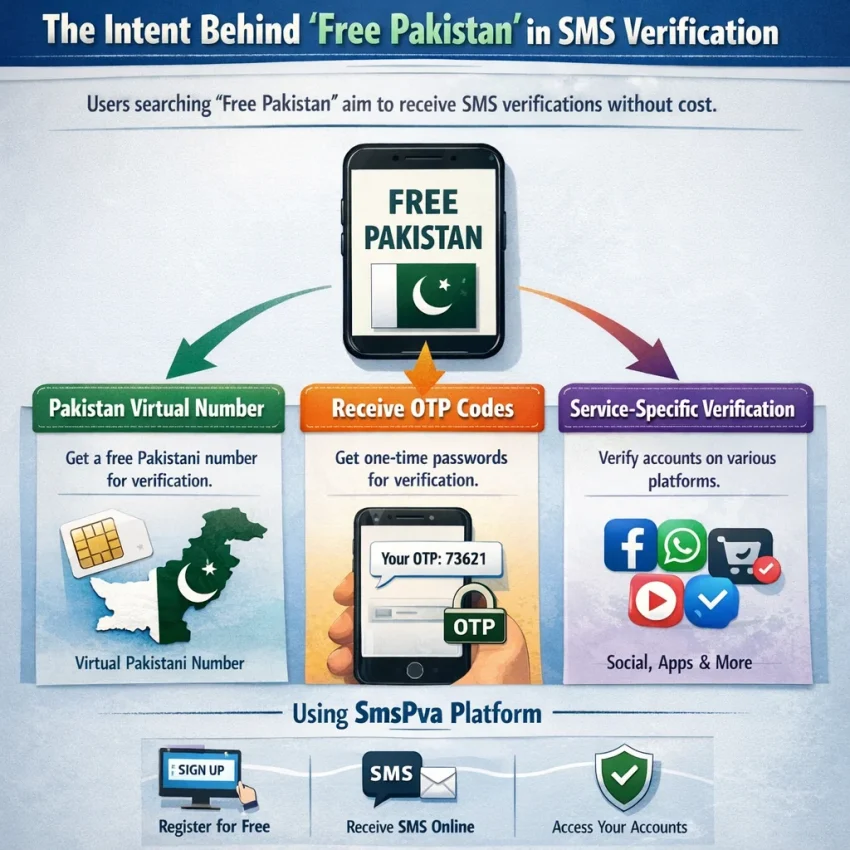
When people search for free pakistan, they usually are not looking for a random freebie. In most cases, they want a Pakistan virtual number, a way to receive SMS online in Pakistan, a fast OTP for account activation, or a privacy-focused signup flow that does not use their personal number.
That matters because the phrase is vague, but the task is specific. Pakistan SMS verification works best when the number, the service, and the timing line up. A free-looking result may sound appealing, but it often leads to overused numbers, unsupported apps, or codes that never arrive when you need them.
This is why “free” and “successful” often point in different directions. Many users start by looking for a free Pakistan number for OTP, then run into the real problem later. The number may be blocked, mismatched to the target app, or unavailable during the actual verification window.
A better approach is to treat this as a workflow question, not a giveaway question. Instead of asking where to find a free number, ask what gives you the lowest-friction way to complete Pakistan verification without wasting attempts. That shift saves time and reduces failed signups.
What “Free Pakistan” Usually Means in 2026
Most readers need a dependable one-time verification path, not a public inbox. They want a virtual number Pakistan workflow that fits a real service, supports OTP receipt, and gives enough context to finish activation without guessing.
That is where SmsPva fits the intent better. It is built around virtual phone numbers for verification flows rather than vague free-number browsing. If your goal is to receive SMS online for account activation or privacy-focused signups, it makes more sense to start with a verification platform than to gamble on random listings.
Country fit matters too. If Pakistan is the right region for your use case, checking the dedicated virtual numbers page is a cleaner starting point than searching blindly. You can then narrow your choice by the app or service you actually need to verify.
Why free-looking options fail so often
Most unreliable options share the same weaknesses. They do not tell you which services are a good fit. They do not show enough context about country selection. They also rarely help when a code expires or when an app has stricter verification rules.
For example, a user may need a Pakistan OTP number for a messaging app but choose a generic public number instead of a service-specific flow. The result is predictable: too many previous activations, blocked retries, or confusion about whether the issue comes from the app or the number.
The visible price may be zero, but the real cost is lost time, repeated attempts, and locked verification windows. If your goal is account access, setup speed matters more than headline-free claims.
How to Choose a Pakistan Verification Option Without Wasting Time
Most people searching for a Pakistan virtual number are trying to solve one task: get a working OTP for a specific app or signup. That is why the best option is rarely the first page claiming a free Pakistan number. Judge each option by workflow fit instead.
If a platform does not clearly show what service the number is meant for, what country you are selecting, and what to do if the code does not arrive, you are already wasting time.
Start with service match, not just country match
The biggest mistake is choosing Pakistan first and the target app second. Country matters, but service match matters more. A Pakistan OTP number that works for one platform may not fit another verification flow.
Before you buy or try anything, ask these five questions:
1. Is the exact service supported?
2. Can you choose Pakistan intentionally?
3. Is the workflow explained on a public page?
4. Are prices shown clearly enough to evaluate?
5. Is there visible help if something goes wrong?
If any of those answers are missing, move on. Low-quality free pages often fail here. They may show recycled inboxes, but they do not explain service compatibility, timing windows, or what to do after a failed attempt.
Check troubleshooting visibility before you commit
Good verification platforms reduce uncertainty before you spend money. Look for clear product structure, not just a list of numbers. You want public pages that explain the service flow, country selection, and support path.
This matters because Pakistan SMS verification failures often come from avoidable issues: choosing the wrong service, retrying after an OTP window expired, or using a generic flow when a service-specific path was the better choice.
Price clarity also helps. You do not need every detail in advance, but you should be able to tell whether the option is a real paid workflow or a vague free claim that shifts the cost into failed attempts and lost time. In real use, a low-cost, service-specific number is usually cheaper than repeating signups with unreliable public inboxes.
The Best Pakistan Workflow with SmsPva: Step-by-Step Setup for 2026
If you searched for free pakistan, the fastest path is not hunting random public numbers. It is using a clean workflow that matches your app, your country choice, and your OTP timing. In practice, the best Pakistan SMS verification flow starts with the service you want to verify.
1) Start with the target service
Many failed attempts happen because users choose a number first and only later think about the app. Reverse that. Decide what you are verifying first: a messaging app, account activation flow, or privacy-focused signup.
This matters because OTP systems are not generic. A code request for one app may behave differently from another. Some users searching free Pakistan number for OTP actually need a service-led flow, not just any number.
Before moving on, have the app or website open, your signup details entered, and the verification screen ready. That reduces the chance that your OTP window expires while you are still browsing.
2) Choose Pakistan only when it fits
Pakistan is a strong option when you need a Pakistan-specific verification path, want regional consistency, or prefer a Pakistan number for privacy or local alignment. But do not force Pakistan into every verification. If the app expects a different country context, mismatches can lead to failed or delayed attempts.
A good rule is simple: if your account setup or use case is Pakistan-specific, choose Pakistan. If you are testing a service-specific flow, verify that the app accepts Pakistan numbers during signup before requesting the OTP.
Once confirmed, request the number and copy it carefully into the verification form. Double-check the country code and formatting before you submit. Small entry errors cause many OTP failures.
3) Request the number and complete the signup fast
After you obtain the number in SmsPva, stay focused on the active session. Keep the target service open and wait for the OTP to arrive. When the message appears, enter the code immediately. Most verification issues come from delays, expired code windows, or requesting multiple codes too quickly.
If the first code does not work, pause and diagnose instead of spamming retries. Check that you chose the right service, Pakistan was the correct country, the number was copied correctly, and the app did not silently reset the verification session.
Once the OTP is accepted, finish the account setup right away. Add required profile details, confirm the account is active, and save your login state if the app allows it.
Service-Specific Example: Using a Pakistan Number for Signal Verification
If your real goal is Signal verification Pakistan, a generic search for a free Pakistan number for OTP usually sends you in the wrong direction. Signal is not just any SMS flow. You need a number that matches the service workflow and supports a clean incoming code process.
Instead of starting with a broad list of Pakistan numbers, start with the Signal SMS verification page. This narrows the task immediately. You stop asking whether any Pakistan number might work and start asking what is the cleanest way to verify this exact app.
Why the Signal-plus-country path works better
Signal verification has two variables that matter at once: the app and the country. If Pakistan is important for your signup or privacy flow, use the dedicated Signal verification in Pakistan path when it fits, instead of bouncing between unrelated number sources.
A service-country page helps you confirm that you are looking at the right combination before you spend money or start the OTP timer. It also gives you a clearer workflow: select Signal, confirm Pakistan, obtain the number, request the code in the app, then monitor the incoming SMS.
Practical Signal setup with SmsPva
Open Signal and move to phone number verification only after you have the right flow ready. Then choose the Signal service and Pakistan if that matches your intended setup. Copy the assigned number carefully into Signal and double-check the format before you submit.
After you request the code, keep the order page open and watch for the incoming OTP. Enter the code into Signal as soon as it arrives. Do not restart the process too early unless the app clearly times out.
At the time of writing, Signal in Pakistan was listed from $0.60 on SmsPva’s API snapshot, fetched 2026-08-13. That is a current snapshot, not a guarantee, but it often makes more sense than wasting repeated attempts on unreliable free options.
What It Costs: Free vs Low-Cost Pakistan Verification in Real Terms
The appeal of free pakistan is obvious. Users want a quick number, a fast code, and no friction. In practice, truly free Pakistan SMS verification usually costs something else: time, repeated retries, expired OTP windows, and account lockouts after too many failed attempts.
A free public number may already be overused, mismatched to the service you need, or unavailable when the code is sent. Even when it looks usable, you often get poor visibility into what service flow it supports and whether the number is a sensible fit for Pakistan verification.
What “free” often hides
Free options usually hide costs in four places. First, you spend time searching through pages that do not clearly tell you whether the number supports your target app. Second, you risk failed OTP delivery because the number is crowded or not aligned to the service. Third, you may trigger cooldowns by retrying too often. Fourth, you lose momentum and have to start over.
That is why a structured workflow beats a bargain hunt. Instead of asking only whether it is free, ask whether it is the right country, the right service, and the right verification path.
Why low-cost usually wins
Low-cost Pakistan verification is not just about price. It is about predictability. If you need Signal verification Pakistan or Telegram verification Pakistan, a service-aware workflow gives you clearer expectations and fewer guesswork steps.
For Telegram verification in Pakistan, the API snapshot listed pricing from $2.00 at the time of writing, fetched 2026-08-13. As with all live snapshots, that should be treated as current data rather than a permanent rate.
For most readers, the better move is simple: stop optimizing for free alone and optimize for successful completion. A small listed cost is often better than burning several failed attempts on unreliable free routes.
Common Pakistan OTP Problems and How to Fix Them
Most Pakistan SMS verification failures are not random. They usually come from a mismatch between the app, the country, and the number flow you selected. If your goal is to receive SMS online Pakistan users can actually use for OTP, check the basics before you retry.
Fast checks before you request another code
The first problem is country mismatch. Some users choose a Pakistan OTP number because they searched for free Pakistan number for OTP, but the target service may expect a different regional setup. If your account truly needs a local option, confirm that Pakistan fits the service before you proceed.
The second issue is choosing a generic flow instead of the correct service flow. A number used for one app may not be the right workflow for another. Always select the exact platform you want to verify, not just any available number.
If no code arrives, wait a short moment and confirm the app is still on the verification screen. Many OTPs expire quickly. If you leave the screen, refresh the app, or request too many codes in a row, the earlier SMS may no longer help.
Also check for app-side mistakes. A typo in the number, the wrong country code, or selecting call verification instead of SMS can break the process. Some services cache failed attempts for a few minutes, so a clean restart may work better than constant retries.
When to stop retrying
If you have already confirmed the service, country, and number format, do not keep repeating the same failed step. Repeated retries often create more confusion, especially when OTP timers are short.
A good rule is simple: if the same Pakistan SMS verification attempt fails twice for the same reason, change one variable before trying again. That might mean rechecking the service flow, confirming Pakistan is the right region, or restarting the app session.
Final Recommendation: When to Use SmsPva for Pakistan Verification Workflows
If your search for free pakistan really means “I need a Pakistan number that works for OTP verification,” the best next step is a structured workflow, not a random free-number hunt. Free-looking options often fail on the details that matter: the wrong country, no service match, expired codes, or no visibility into what you are actually using.
SmsPva is the better fit when you want a practical Pakistan virtual number workflow for account activation, privacy-focused signups, or one-time verification. It makes the process clearer because you can start with the target service, then confirm whether Pakistan is the right regional choice for that task.
Choose a service-specific path whenever possible. That matters most for platforms with distinct verification behavior, such as Signal or Telegram. In short, use SmsPva when you need a real verification path, want clearer service-country alignment, and would rather avoid wasting attempts on unreliable free options.
Start with the exact service you need, pick Pakistan only when it matches your use case, and treat “free” as a search term to refine, not a workflow to trust.