

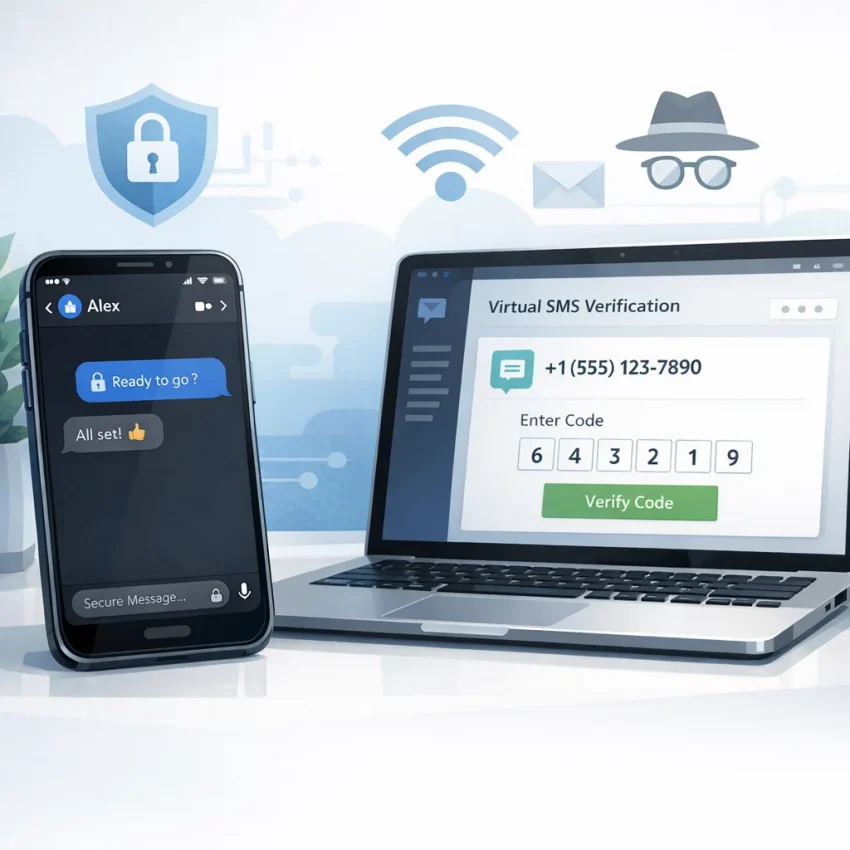
What “Signal without phone number” really means in 2026
The phrase signal without phone number is easy to misunderstand. In real use, it usually means using Signal without exposing your personal number. It does not mean skipping phone verification completely.
Signal still uses phone-based activation in 2026. So the practical workflow is to verify with a non-personal number, receive the OTP, and complete setup without tying the account to your everyday SIM.
That is why people search for terms like signal verification without personal number, virtual number for signal, and receive sms online for signal. They want a working setup, not a theory.
This approach is useful for freelancers, privacy-focused users, and anyone who wants cleaner separation between personal and work communication. It also helps users testing a secondary Signal setup before deciding how to manage it long term.
The key is realistic expectations. A virtual number is not a bypass. It is a tool for privacy separation and account activation. You still need to choose the right number, enter it correctly, wait for the code, and finish registration on a stable device.
What users are actually looking for
Most users asking how to create a Signal account without a phone number want one of three outcomes. They want to avoid sharing their real number, separate personal and work identities, or use a repeatable process that works again later.
That is why a service-specific route works better than random public inbox lists. Signal verification is a narrow task. It works best when the number source is matched to that exact service. SmsPva fits that need because it is built for SMS verification workflows.
If you want a practical route, start with Signal SMS verification rather than guessing with generic SMS tools.
Why SmsPva is a practical solution
If your goal is to use Signal without exposing your personal number, SmsPva gives you a direct workflow built around virtual phone numbers and OTP receipt. You are not removing verification. You are choosing a non-personal number for activation and keeping your identity layers more separate from the start.
That is the real buyer intent behind this topic. Users want a working setup in 2026, and SmsPva is a natural place to begin.
The best workflow: how to register Signal with a virtual number using SmsPva
If you want Signal without personal number exposure, the goal is simple: register Signal with a non-personal number and complete verification cleanly. In 2026, the best method is to use a service-specific virtual number flow instead of random inboxes.
That is where SmsPva works well. You choose a Signal-compatible number, request the code, receive the OTP, and finish activation in a controlled sequence.
Step 1: Prepare Signal before buying a number
Install Signal first and reach the registration screen before selecting a number. This reduces waste and helps you act quickly when the code arrives.
Before starting, check a few basics. Use a stable internet connection. Make sure Signal is updated. Confirm the country you want. Decide whether the account is for personal privacy, freelance work, testing, or another separate workflow.
Many signal SMS verification failures come from setup mistakes, not the number itself. Users often pick one country but leave a different country code inside the app. Others request the OTP on one device and try to finish elsewhere.
Step 2: Choose the right Signal number on SmsPva
Next, go to Receive SMS online on SmsPva and open the Signal flow. Choose Signal as the target service first. That is better than buying a generic number because the selection is tied to the exact verification task.
Then select the country if it matters for your workflow. Some users want a local-looking registration. Others mainly care about cost planning. In both cases, the country code on SmsPva should match what you enter in Signal.
Check the listing carefully before proceeding. Confirm the service, country, and number format. Do not switch countries mid-process unless you plan to restart cleanly.
If you want to receive Signal OTP online, slow down here. A mismatch between the selected country and the number entered into Signal is a common reason for failure.
Step 3: Request the code and complete registration
Enter the number into Signal exactly as shown, then request the verification code. Return to your SmsPva order screen and watch for the incoming SMS.
When the code arrives, enter it promptly. Codes expire, and repeated retries can create delays or confusion. Use the latest code only.
After Signal accepts the OTP, finish the account setup. Set the display name, add an optional image, and review privacy settings. If this account is meant for compartmentalized use, label it clearly and keep notes on the country and number type used.
This part matters more than many users think. If you want a reliable signal virtual phone number workflow, document the registration date, service used, and whether the number was meant only for one-time activation.
Step 4: Keep the workflow clean after verification
Once the account is active, avoid mixing it with your personal setup right away. Keep the session stable until registration is fully complete. Do not switch numbers or repeat logins during the final steps.
A simple record helps later: account purpose, registration country, date created, and whether continuity may matter. This is especially useful for freelancers or users managing separate communication lanes.
In short, the cleanest workflow is simple: prepare Signal first, choose the exact Signal-compatible number on SmsPva, match the country code carefully, request the OTP once, enter it quickly, and document the setup.
Choosing the right number type for Signal: one-time activation vs rental
If you want Signal without your personal phone number, your first big choice is the number type. Most users will choose between a one-time verification number and a rented number. Both can work, but they solve different problems.
A one-time number is the lean option. You use it for the initial OTP, finish setup, and move on. This suits users who want fast account creation, low commitment, and clear separation from their personal line.
A rented number makes more sense when continuity matters. It may fit users who expect future verification events, want cleaner recordkeeping, or run repeatable workflows across projects.
When a one-time number is the better fit
Use a one-time number if your setup is straightforward. Good examples include a privacy-focused personal account, a short-term project identity, or a separate registration that does not need ongoing number access.
This option keeps the process simple. You choose the service-specific route, receive the OTP, complete registration, and document the account details on your side. For many users, that is enough.
Still, one-time use has limits. If the account later needs access to the same number, this option may not match your long-term needs. That does not mean the activation failed. It means the lifecycle and number type did not match.
When renting a number makes more sense
Rent a number when continuity matters more than minimum setup cost. This can help freelancers with stable client identities, operators with repeatable work profiles, or users who want a stronger recovery habit around the account.
If that matches your setup, the dedicated Signal SMS verification rental flow is the practical route on SmsPva.
A simple rule works well: choose one-time activation for quick setup, and choose rental when you expect the number to remain relevant after setup day.
Country selection matters: comparing United States and United Kingdom Signal verification workflows
If you want signal without phone number exposure, country choice affects price planning, number availability, and how well the number fits your workflow.
The best approach is simple. If you do not need a specific country, start with the cheaper valid route. If you do need country alignment for clients, records, or workflow consistency, check that exact country path before paying.
Price and availability planning
At the time of writing, Signal verification in Unt. Kingdom was listed from $0.50 on one route snapshot, with another United Kingdom snapshot listed at $0.77. By comparison, Signal verification in United States was listed at $2.01. These are API snapshots, not guarantees of future price or stock.
That difference matters if you verify accounts regularly. A UK route may offer better value when you only need a working virtual number for Signal and do not need a US identity layer. A US route still makes sense when your workflow is built around US-based numbers.
Availability can change faster than pricing. A low listed price only helps if a number is available when you need it. That is why country-specific service pages are useful.
When to choose UK vs US for Signal
Choose the United Kingdom when cost control is the priority and you do not need a US number. This often fits one-off registration, testing a privacy-separated setup, or creating a new Signal identity untied to your main line.
Choose the United States when country consistency matters more than upfront cost. That may fit a US-facing freelance workflow or a communication identity you want to keep geographically aligned.
Whichever country you choose, keep the process consistent. Confirm the number page first, then enter the matching country and number inside Signal. That order reduces avoidable mistakes.
Common Signal verification problems and how to troubleshoot them
The most common mistake in a signal without phone number workflow is expecting every first attempt to work perfectly. Signal still depends on phone-based activation, so your goal is to reduce avoidable errors.
If your signal OTP code is not received, do not keep tapping resend immediately. First check the basics. Did you choose the right country? Did you copy the full number exactly? Did you request the code only after reaching the correct Signal screen?
When the OTP does not arrive
If no message appears, wait a short interval before taking action. Delivery can vary by route and timing. Repeated requests can invalidate the previous code and create a confusing loop.
Work through this order:
1. Confirm you selected Signal, not another service.
2. Confirm the country in Signal matches the purchased number.
3. Recheck every digit before requesting another code.
4. Wait briefly before retrying.
5. If the session still looks bad, start over with a fresh number and a clean attempt.
Starting fresh is often faster than forcing a broken session, especially with a temporary number for signal verification.
Country mismatch, expired codes, and setup mistakes
Country choice affects formatting as well as price. If you selected a UK number, the Signal app must reflect that same country context. The same applies to a US number. A mismatch between the selected country and the number prefix is one of the easiest ways to fail verification.
Expired codes are another common issue. Do not request a code until you are ready to enter it immediately. If you asked for multiple codes, use the newest one.
Also check for simple setup issues: weak network connectivity, an outdated app version, the wrong region selected in the app, or unrealistic assumptions about repeating access with a one-time number.
If problems continue, stop guessing and review the current troubleshooting guidance on SmsPva rather than repeating blind retries.
How to build a safer privacy workflow around Signal registration
If your goal is signal without phone number exposure, using a non-personal number solves only one part of privacy. A safer setup also separates your device habits, notes, and account records.
Start with simple discipline. Use a dedicated password manager entry or note for the account. Record the country, signup date, and whether you used a one-time or rented number. This prevents a common later problem: forgetting how the account was created.
Keep the registration flow consistent from start to finish. Open Signal, request the code, and complete the OTP step in one session. Avoid switching devices mid-process unless necessary.
Separate identities cleanly
Privacy separation works best when each identity has its own workspace. That can mean a separate browser profile, distinct note set, and clear contact labels. Do not mix work and personal autofill data or saved sessions if your goal is clean separation.
Device consistency matters too. If you register on one phone, finish setup there. Many problems come from small mismatches, not from the number itself.
Keep the workflow simple
Most users do not need an overly complex setup just to verify Signal. Good habits matter more than extra tools. Use one identity, one process, clear records, and minimal changes during activation.
If you expect to manage several separate communication workflows, the same principle applies: keep each registration organized and avoid mixing account contexts.
Final decision guide: when SmsPva is the best choice for Signal verification
If your goal is signal without phone number, the practical meaning is straightforward: activate Signal without exposing your personal number. SmsPva is a strong fit when you want a service-specific workflow, clear country selection, and the option to choose between one-time and rented numbers.
Choose SmsPva if you want privacy separation between personal and app identities, need a repeatable setup for freelance or operational use, or want country-specific options without guessing through generic marketplaces.
For most users, one-time Signal verification is the simplest route. If you expect ongoing access needs or want stronger continuity around the account, rental may be the better fit.
Before you pay, check four things: the correct Signal service flow, the country you actually want, whether one-time or rental matches your use case, and whether you are ready to complete registration promptly.
If you want the most direct path, use smspva.com to receive SMS verification codes with virtual phone numbers and start with the Signal-specific workflow instead of your personal number.