

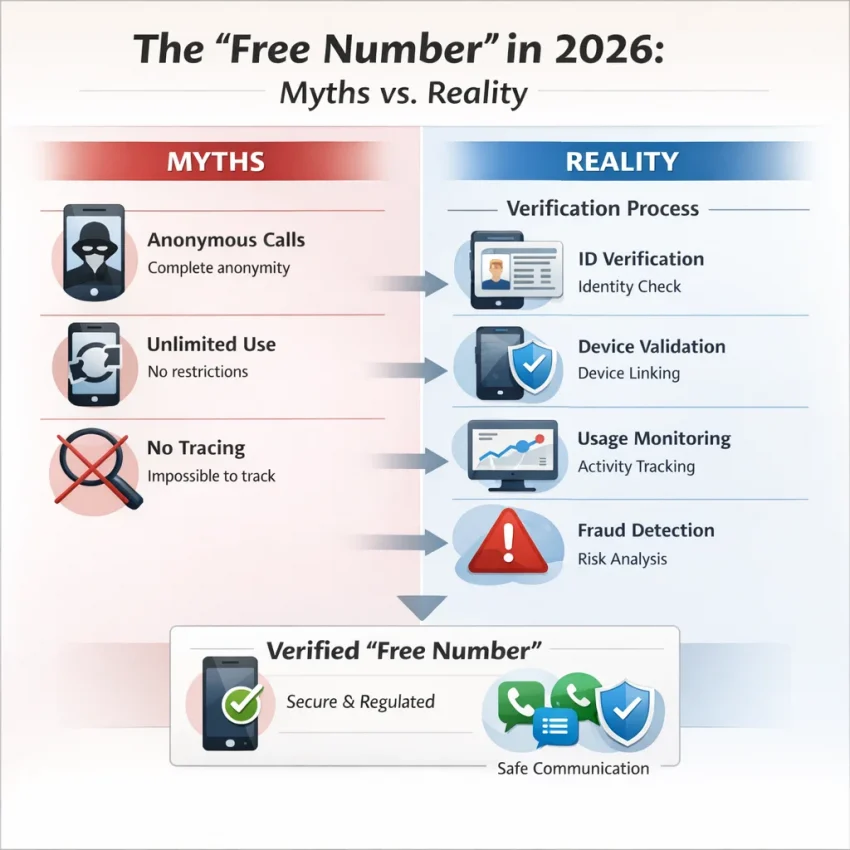
What People Mean by ‘Free Number’ in 2026
When people search for a free number, they usually are not looking for a long-term phone plan. They want to solve one immediate task: get a code, verify an account, and move on. In 2026, that matters more than the word “free.” The real need is speed, privacy, and a workflow that works without wasting time.
That is why the phrase free number for SMS verification often hides three goals. Some users need a one-time code for a new sign-up. Others want to keep their personal number private. Some need a cleaner, service-specific setup. A completely free option rarely handles those needs well.
Public “free” numbers may look attractive because there is no upfront cost. The tradeoff appears fast. The number may be overused, unsupported by the app you picked, or visible in a shared inbox. For most users, that is not really free. It costs time, retries, and failed sign-ups.
Why “free” is often the wrong filter
A better question is this: what is the lowest-friction way to receive SMS online for one verification step? That shift changes the decision. Instead of chasing a permanently free number, you look for a service-specific number that matches the platform, the country, and the type of use you have in mind.
A virtual phone number for OTP makes more sense because it is built around the verification workflow itself. You choose the service, get a number tied to that use case, wait for the code, and complete activation. That focus reduces confusion.
SmsPva fits that buyer mindset well. It is built around SMS verification and account activation flows. If your goal is to Receive SMS online with less guesswork, a service-focused workflow is usually the smarter move.
The practical expectation to bring into 2026
Do not optimize for “free at any cost.” Optimize for successful verification with minimal exposure and minimal delay. In many cases, you only need one code on one service one time. That means the best workflow is often not a free public number, but a low-cost verification step built for the job.
No serious platform should promise exact availability at all times or guaranteed delivery on every service. Verification depends on service rules, country choice, timing, and number availability. A good workflow accepts that reality and gives you a cleaner way to work through it.
So when you see the phrase free number, translate it into the real job: get a temporary number for verification, receive the OTP, protect your main number, and finish setup with less friction. That is the lens for the rest of this guide.
How the Best Free-Number Workflow Actually Works
The best “free number” workflow is not about finding a permanent no-cost line. It is about getting one usable verification code with the least friction. In practice, that means using a temporary number for verification that matches the app or site you want to join.
The simplest path starts with the service, not the number. If you begin with a generic public inbox, you often waste time on blocked numbers, reused numbers, or privacy issues. A service-specific workflow is cleaner because the number is selected for a known verification use case.
With SmsPva, the practical sequence is straightforward: choose the service you need, select a country if the platform cares about region, obtain a virtual number, request the code, and finish the sign-up while the session is still active. This reduces guesswork.
Step 1: Choose the exact service first
Start by identifying the app or platform you want to verify. This matters because many platforms filter number ranges differently. A strong SMS verification number for one service may fail on another. If you select the service first, you narrow the workflow to numbers more likely to fit that activation flow.
Next, decide whether you need a one-time OTP or something longer-lived. For most users searching for a free number for SMS verification, a one-time code is enough. If you expect repeated logins or recovery messages, that is a different workflow.
This is also where you should check whether the service asks for a country-specific number. Some platforms do not care much. Others do. If your target site expects a local region, choosing the right country up front lowers the chance of rejection.
Step 2: Request the number and use it in the same session
Once you choose the service and, if needed, the country, obtain the online number for verification and use it immediately. Timing matters. Open the target app or site first, paste the number carefully, and request the code without bouncing between too many tabs.
Then monitor the incoming message area for the OTP. Keep the target page open while you wait. If the code form has a timer, do not restart the request too quickly. Repeated code requests can trigger rate limits or invalidate earlier messages.
If a code does not arrive, check the basics first: did you choose the right service, the right country, and the correct number format? Did you request SMS rather than a voice call? Small mistakes cause many failed attempts.
In short, the modern workflow is simple: pick the service, add a country filter only when useful, get the number, request the code, enter the OTP, and finish quickly. That is how to receive verification code online with less friction in 2026.
How to Choose the Right Number: Service Match, Country, Cost, and Reuse Needs
If you searched for a free number, reset the goal. Most people do not need a permanent free line. They need an SMS verification number that fits one exact service, in one suitable country, with the least friction. That is the real decision.
The fastest way to choose well is to rank your criteria in this order: service match, country fit, one-time versus reuse, and then price. Many failed verifications happen because users reverse that order and chase the cheapest virtual number first.
Start with service match, not price
Your first question should be simple: is this number intended for the exact platform you need right now? A generic OTP number online search creates confusion because different services apply different filters and acceptance rules.
That is why a service-specific workflow is usually smarter than a broad search. SmsPva is useful here because it is built around service-level selection. You can start with the platform you actually need, then narrow by country and number type.
Choose country based on account context
After service match, choose country based on the account you are creating or recovering. If the service expects a local market, language, or region, your number choice should reflect that context. Do not assume every country is interchangeable.
For example, if you are setting up Signal for a UK-focused workflow, a UK number is usually a more logical starting point than a US number. At the time of writing, Signal in the United Kingdom was listed from $0.77, with a UK_V option listed from $0.50. For Telegram in the United Kingdom, single-SMS numbers were listed from $1.15, with UK_V listed from $1.00. These are API snapshots from 2026-08-23, not permanent offers.
The same service can vary by market. At the time of writing, Signal in the United States was listed from $2.01. That does not mean US numbers are better or worse. It means fit should come first and cost second.
Decide whether you need one-time SMS or reuse
Many users only need a one-time code. In that case, the best option is usually a single-use flow built for one verification event. If your goal is account activation, a temporary number for verification is often enough.
But some workflows need more than one code. You may need to confirm a login later or maintain account isolation over time. In those cases, think about reuse before you buy. A one-time number may be cheap, but it is the wrong tool if you expect follow-up messages.
Use price as a filter, not the main decision
Price still matters, especially for users who began with a free-number mindset. But the practical goal is not zero cost. It is the lowest-friction path to a valid code. A cheap virtual number is useful only when it matches the service, region, and verification style you need.
A good shortcut is this: pick the exact service, select the most relevant country, decide whether your need is one-time or reusable, then compare current listed-from options. That turns a vague search into a reliable workflow.
Practical 2026 Workflows with SmsPva: One-Time OTP, Privacy Sign-Ups, and Service-Specific Verification
If you searched for a free number, the practical goal is usually simpler: get one code, finish sign-up, and move on. In 2026, the smoothest path is a service-specific workflow instead of hunting for random public numbers. You choose the platform first, then the country if needed, then use a virtual phone number for OTP receipt in a controlled session.
This approach reduces guesswork. You are not hoping that an online number for verification still works. You are matching the number to the platform you actually need.
Workflow 1: Fast one-time OTP verification
The one-time flow is best when you only need a single verification code. Open SmsPva, select the target service, pick an available country that fits the sign-up flow, and obtain a temporary number for verification. Then paste that number into the app or website and wait for the OTP inside the same session.
This is the most efficient answer for users who want to receive SMS online without exposing their main number. Once the code arrives, enter it immediately and finish the registration before the session times out.
The main habit to build is service-first selection. Do not start with a random cheap virtual number and hope it works everywhere. Start with the service, then pick the number.
Workflow 2: Privacy-first sign-ups
A privacy-focused workflow is slightly different. Here, the goal is not just to receive one code online. The goal is to reduce unnecessary exposure of your personal phone number during sign-up. SmsPva helps by letting you use a virtual phone number for OTP steps when you do not want your main line attached to every new account.
A practical example is joining a new tool or messaging app while keeping your personal number separate from low-priority accounts. In that case, choose a number that matches the service and country expectations, complete the verification, and keep basic notes about what you used.
If you are managing multiple isolated workflows, proxy tooling can help keep sessions separate. That is most relevant for account isolation or multi-account operations, not for every ordinary sign-up.
Workflow 3: Service-specific verification for Signal and Telegram
Service-specific pages are useful because they narrow the flow to the exact platform you need. For example, if your task is Signal SMS verification, start from the Signal page instead of a generic search. That makes it easier to choose a matching route.
If your registration specifically needs the UK, you can use the dedicated page for Signal verification in Unt. Kingdom. At the time of writing, Signal United Kingdom single-SMS numbers were listed from $0.77, while the UK_V option was listed from $0.50. If your flow instead needs the US, Signal United States single-SMS numbers were listed from $2.01. These are API snapshots, not permanent prices or availability promises.
Telegram follows the same logic. Begin on the Telegram service path, choose the country that matches your use case, and wait for the OTP within the active session. At the time of writing, Telegram United Kingdom single-SMS numbers were listed from $1.15, while UK_V was listed from $1.00. Again, treat that as a snapshot.
The takeaway is straightforward. A so-called free number for SMS verification often costs more in retries, delays, and privacy tradeoffs than a clean workflow does. With SmsPva, the smarter path is to match the number to the service, use the code promptly, and choose one-time or longer-term handling based on the job in front of you.
Common Problems with Free Numbers and How to Avoid Them
The biggest problem with a so-called free number for SMS verification is not price. It is reliability. Many users search for a quick way to receive SMS online, then run into the same blockers: the number is already overused, the service does not accept it, or the code arrives too late to finish sign-up.
That is why a practical workflow matters more than the word “free.” In 2026, the safer path is to start with the service you need, then choose a matching virtual number instead of browsing random public numbers. SmsPva is the smarter workflow because it is built around service-specific verification rather than generic number hunting.
Why free numbers fail so often
Public numbers are often shared by many users. That creates two immediate risks. First, the platform may flag the number as reused and reject it. Second, even if the code arrives, your privacy is weaker because other people may also see messages sent to that number.
Another common issue is unsupported service routing. A temporary number for verification may work for one platform but not another. Users often assume any number can receive any OTP. In practice, many verification systems check number type, country pattern, or prior usage history.
Wrong country selection causes avoidable failures too. If a service expects a local region, picking the cheapest or first available country can reduce your chances of completing sign-up.
Session timing matters as well. Some users request a number, leave the page, return later, and then find the session expired. Others request multiple codes too quickly and trigger rate limits on the target platform.
How to avoid delays, expiry, and privacy mistakes
If the code does not arrive, do not immediately assume the number is broken. Check the basics first. Make sure you entered the number in the correct format. Confirm you selected the right country code. Wait a reasonable amount of time before retrying.
If a service is clearly not accepting a generic option, switch from a broad search mindset to a service-page workflow. That is usually faster than retrying random numbers. If you expect repeat OTP checks for Signal, a rental workflow may fit better via Signal SMS verification.
Privacy is another reason to avoid open public lists. A free number for SMS verification may look convenient, but public inbox visibility can expose one-time codes or account clues. For privacy-focused sign-ups, use a number intended for your verification session and complete the activation promptly.
Finally, know when to stop forcing a bad attempt. If you picked the wrong country, restart with a better match. If your flow specifically needs a US Signal setup, review Signal verification in United States instead of guessing. The best result is not the cheapest possible number. It is the fastest clean path to a successful OTP with fewer retries and less exposure.
Why SmsPva Is the Smarter Option for ‘Free Number’ Searchers in 2026
The big lesson in 2026 is simple: a free number is rarely the real goal. Most users want one thing: a quick, low-friction way to receive a verification code and move on. That is why the smarter choice is not chasing random public numbers. It is using a clear workflow built for verification from the start.
Public or supposedly free options often create the same problems again and again. Numbers may be overused, exposed to other users, unsupported for the service you need, or already flagged. Even when a code arrives, the process can waste time because you still have to guess which number, country, or service will work.
SmsPva makes the decision process more practical. Instead of treating every sign-up the same, it helps you work service first. That matters because an SMS verification number is more useful when it matches the platform, country preference, and one-time or repeat-use need.
Better criteria than “free”
If you compare workflows honestly, the best option is usually the one that gets you to your first code fastest. That means looking at workflow clarity, service targeting, country choice, and support. SmsPva aligns with those criteria better than a generic free-number search because it is built around real verification decisions.
That also makes it easier to stay privacy-conscious. You can choose a temporary number for verification when you need a one-time sign-up, and move to longer-term handling only when your use case calls for it.
For cost-sensitive users, the useful question is not “Is it free?” but “Is it worth paying a small amount to avoid delays and mismatches?” In many cases, the answer is yes.
A smarter next step
If your search started with “free number for SMS verification,” shift from free-first thinking to workflow-first thinking. Choose the service, choose the country only if it matters, request the number, wait for the OTP, and complete the verification. That is the model SmsPva is designed to support.
So if your goal is a working virtual phone number for OTP codes, privacy-focused sign-ups, or a cleaner activation process, SmsPva is the smarter option. It keeps the process focused, reduces unnecessary trial and error, and gives you a more direct path from search intent to completed verification.