

What a Phone Number for SMS Verification Does—and When to Use One
A phone number for SMS verification gives a service a destination for sending a text message. The message usually contains a short code you enter to complete a sign-up or another account action.
This code is often called a one-time passcode, or OTP. It may be valid for a limited time or a single attempt. SMS verification can confirm that someone can receive a message at a number, but it does not prove identity or secure an account on its own.
A virtual phone number is a number you access through an online service rather than a personal mobile line. SmsPva provides virtual numbers for SMS verification and OTP receipt. Check the live listing and instructions because availability and the receiving flow can change. You can receive SMS online with SmsPva when a virtual number fits your use case.
When a separate number may make sense
A separate number can keep a one-time verification workflow apart from your everyday phone number. It may suit a permitted sign-up or activation when you prefer not to share your personal number. This is a practical separation, not a promise of anonymity.
A service may associate an account with other information, and a virtual number does not bypass its checks. Before using one, read the destination service’s current terms and follow its rules.
Acceptance depends on the destination service
Not every service accepts every virtual number. A service may reject a number, restrict certain number types, or require another verification method. A listing does not guarantee that a message will arrive or that the service will accept the number.
Treat the number as a channel for a specific verification step, not as a universal replacement for a personal line. If you may need it later for sign-in or recovery, consider whether you can maintain access before choosing a temporary option.
Before You Start: Choose the Service, Country, and Verification Purpose
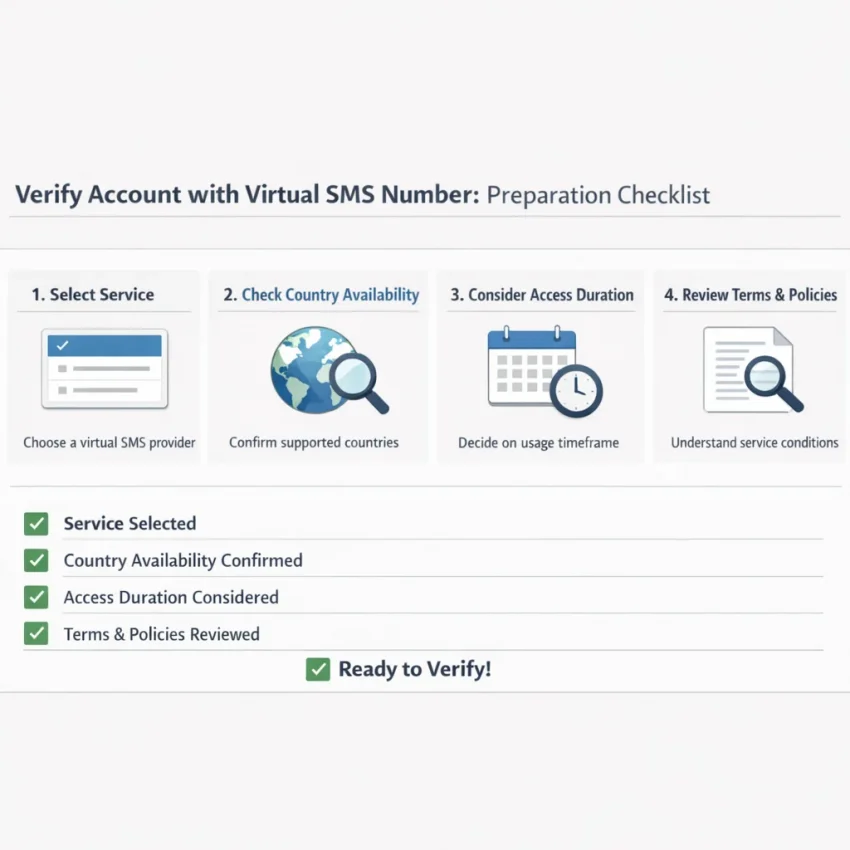
Before choosing a phone number for account verification, identify the service that will send the code. Then check SmsPva’s current listings for that specific service. Availability can change, so rely on the live information rather than an old guide or screenshot.
Check the service and country
Find the service on SmsPva and review the countries and number options currently shown. A country that seems suitable in general may not have a number listed for your service at that time. Choose from the available options and read any details shown on the page.
Also check the destination service’s current rules. Some services restrict virtual numbers or require a particular number type. Use a virtual number only when your intended use complies with those rules and applicable requirements.
Decide how long you need access
A one-time verification flow differs from an account that may request another code later. If you expect to need the same number for login challenges or recovery, consider whether you can access it again. A temporary or limited-access number may not suit ongoing account access.
Before proceeding, confirm:
- Service: Which platform will send the code?
- Country: Which countries are currently listed for that service?
- Duration: Do you need one SMS or possible future access?
- Rules: Does the destination service allow this type of number?
These checks help you choose with realistic expectations. Availability, delivery, timing, and acceptance are not guaranteed.
How to Use SmsPva to Receive an SMS Verification Code
The basic process is to select a service and a currently listed country, use the number shown for that option, and check SmsPva’s receiving flow. Then enter any received code on the service that requested verification. Page layouts and labels may change, so follow the instructions displayed on the live site.
Use this workflow only when the destination service allows the number and your use follows its current rules. A number or code may not be available, accepted, or delivered.
1. Find the service and review its listings
- Locate the service. Search or browse SmsPva for the platform that will send the SMS. For example, review the Signal SMS verification page for its service-specific options. This example does not mean Signal will accept every virtual number.
- Check the country options. Review the countries currently listed for that service and any details shown. Listings can change, and a listing does not guarantee acceptance or delivery.
- Consider future access. A one-time code may suit a limited activation. If you expect to need the number later, check whether its access terms fit that need.
- Follow the live instructions. Select an option as directed on the page. Do not assume anything about duration, delivery, or future access beyond the information shown.
Keep the SmsPva receiving flow available. You will return to it after asking the destination service to send the code.
2. Enter the number and request the code
- Copy the displayed number accurately. Follow the format requested by the destination service. If it asks for a country calling code separately, enter it as instructed. Check for missing digits or an incorrect country selection.
- Submit the number on the destination service. Use the service’s official app or website, enter the number, and request an SMS code. Follow any confirmation prompt shown there.
- Return to SmsPva’s receiving flow. Check the page or message area associated with your selection, following the current instructions. The interface may change, so do not rely on an assumed button or inbox layout.
- Enter the code in the requested field. If a message arrives, enter its code on the destination service’s verification screen. Keep the code private; do not share it with anyone claiming to provide support.
Requesting a code does not guarantee a message will appear. The destination service may delay, reject, or limit requests. Avoid repeated submissions and follow the prompts shown on both sites.
3. Confirm the result
After entering the code, wait for the destination service to confirm whether verification succeeded. If it rejects the code, check the number, country, and service requirements before trying again.
Use a virtual number only for the verification you intended. It can separate an SMS step from your personal number, but it does not make an account anonymous or guarantee future access. If you need the number for sign-in or recovery, consider whether this option is suitable before creating the account.
Service and Country Example: Check the Live Listing Before You Begin
Signal illustrates why you should check a service and country together. A number listed for one country may not be available in another, and Signal applies its own acceptance rules. Review the current options on the Signal verification in the United Kingdom page if that is the country you are considering.
A listing does not guarantee that Signal will accept a number or that an SMS verification code will arrive. Check the live information before deciding whether an option fits your task.
How to interpret the price snapshot
In the API snapshot fetched on October 30, 2026, Signal entries for the United Kingdom appeared at $0.50 and $0.77. A United States entry appeared at $2.01. These are time-sensitive listed prices, not permanent rates or confirmation of current stock.
The two UK entries are distinct listings, and the snapshot does not explain their difference. Do not assume they are interchangeable. Check the live page for current details rather than relying on a saved price or older guide.
This example is a way to assess the workflow, not a promise of successful Signal registration. Follow Signal’s current terms and consider whether you will need continued access to the number after verification.
Privacy, Account Access, and Responsible-Use Limits
A virtual phone number can separate a one-time SMS verification flow from your personal number. That may reduce how often you share your main number, but it does not make an account anonymous or guarantee acceptance.
Account privacy depends on more than the phone field. A service may associate an account with other details, such as device, browser, network, payment information, or activity. A virtual number does not hide those signals or change the service’s data practices.
Some services may reject virtual numbers, limit accounts verified with them, or change their requirements. Check the destination service’s current terms. Do not use a temporary number to bypass eligibility rules, impersonate someone, or evade account restrictions.
Plan for future access
Consider what happens after the first SMS arrives. If you may need the same number for password resets, security checks, or account recovery, make sure its access arrangement suits that need. A number you cannot access later may leave you unable to complete recovery.
For an account you rely on, use recovery methods you can maintain and that the service permits. Where available, consider an authenticator, backup codes, or another supported method. Do not assume a number used for initial verification will remain available or receive future messages.
If access may be temporary or non-exclusive, avoid making that number the sole recovery route for sensitive or essential accounts. Review the live SmsPva listing and its guidance before proceeding.
Keep related tools distinct
SmsPva provides virtual numbers for SMS verification, but users remain responsible for following the destination service’s rules. Delivery, timing, availability, and acceptance are not guaranteed.
SmsPva also offers related proxy tooling for workflows where account or network isolation is relevant. A proxy is separate from SMS verification and is not required to receive a code. Assess each tool independently and follow the relevant service policies.
Troubleshooting: What to Check If the SMS Code Does Not Arrive
A missing SMS verification code can have several causes. The number may be entered incorrectly, the destination service may still be processing the request, or it may not accept virtual numbers. Check the following before trying again. Delivery, timing, and acceptance are not guaranteed.
Check the selection and number
Confirm that you selected the service you are verifying and a country currently listed for it. Then compare the number in the destination service’s phone field with the number shown in the SmsPva flow. Check every digit and the country prefix, and follow the destination service’s formatting instructions.
Make sure you submitted the request after entering the number. Read any status message or confirmation prompt instead of assuming the request went through.
Revisit the receiving flow
Return to the active SmsPva receiving flow and check that it matches the number and service you selected. Follow the current page instructions; labels and layouts may change.
The destination service may take time to process a request. Follow any wait period or guidance shown on its screen. A wait period does not guarantee that a message will arrive. Avoid repeatedly requesting codes, which can trigger limits or create confusion about which code is current.
If the destination service reports that it cannot send a message, consider whether its rules allow virtual numbers. Some services restrict number types or may not accept a particular number.
Know when to ask for guidance
If the code still does not appear, avoid cycling through numbers or making rapid repeat requests. Check the destination service’s current verification rules and any error message. For SmsPva-specific questions, review SmsPva Help or contact support if the issue persists.
When seeking help, share relevant details such as the service, country, and status message. Do not post verification codes publicly. Support guidance may explain next steps, but it cannot guarantee delivery or acceptance.
A Quick Decision Checklist and Next Step
Before using a phone number for SMS verification, confirm that the destination service allows virtual numbers and that the relevant service and country appear in SmsPva’s current listings. Listings can change, so check again when you are ready to proceed.
- Is the use permitted? Follow the destination service’s current terms.
- Does the listing fit? Match the service and country to your task and review the live details.
- Do you need ongoing access? A one-time SMS workflow may not suit future sign-ins or recovery.
- What if access ends? Avoid relying on an unsuitable number as the only recovery option for an important account.
A virtual number may keep a verification flow separate from your personal number, but it does not make an account anonymous or guarantee acceptance. The service may reject the number, and delivery, timing, and availability can vary.
Take the next step carefully
If the use is allowed and a listed option suits your needs, SmsPva is a practical option for receiving SMS verification codes with a virtual phone number. Check the live information, follow its instructions, enter the number accurately, and use any received code only for the verification you initiated.
If the account matters beyond a one-time activation, choose a verification method that supports reliable future access. When you are unsure whether a virtual number is appropriate, check the destination service’s rules before requesting a code.
Frequently Asked Questions
How do I use a phone number from SmsPva to receive an SMS verification code?
Choose the service and a currently listed country on SmsPva, then follow the live instructions to select a number. Enter it on the destination service, request an SMS, check the associated receiving flow, and enter any code you receive. Delivery and acceptance are not guaranteed.
Can every service accept a virtual phone number for SMS verification?
No. Services may restrict virtual numbers, reject specific numbers, or require another verification method. Check the destination service’s current rules before starting.
What should I check before selecting a service and country on SmsPva?
Confirm the exact service, review the countries and options currently listed for it, decide whether you need one-time or ongoing access, and check the destination service’s terms.
What should I do if my SMS verification code does not arrive?
Recheck the service and country, confirm that you entered the number correctly, revisit the matching receiving flow, and follow any wait guidance shown by the destination service. Avoid repeated requests. If the issue continues, consult the relevant support guidance.
Is a virtual number suitable for account recovery or ongoing access?
It depends on whether you can access the same number when needed and whether the service permits it. A temporary number may not be suitable as the only recovery method for an important account.
Are SmsPva prices and number availability fixed?
No. Prices and availability can change. Check the live listing before proceeding; any price shown in this article is a dated API snapshot, not a permanent rate or stock guarantee.