

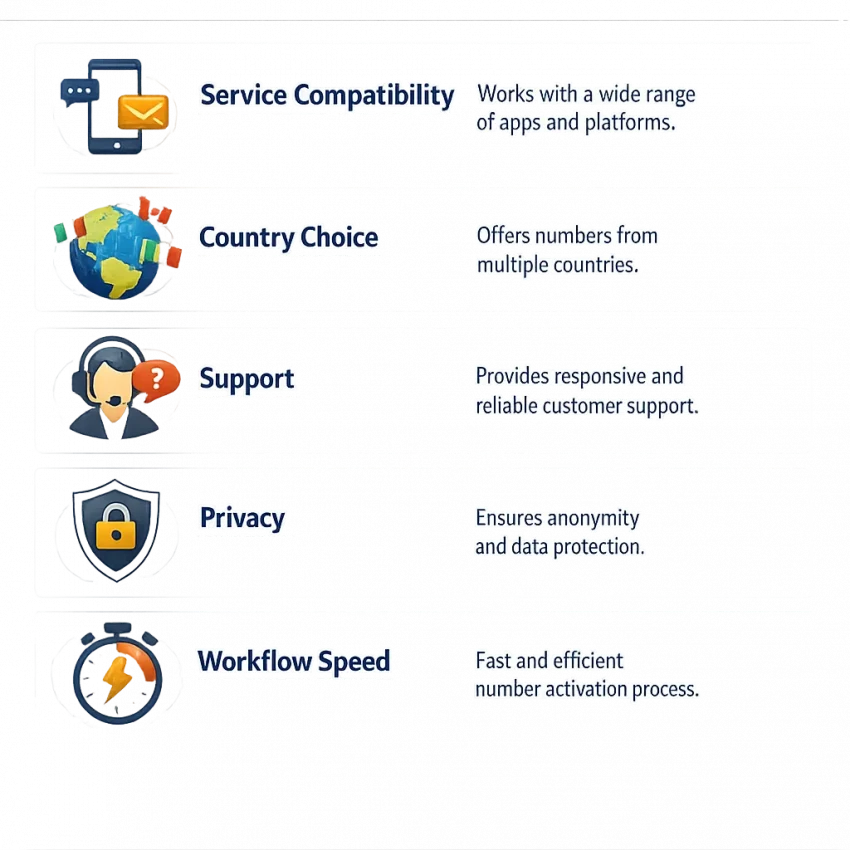
The best temporary number for verification in 2026 is not just a number that can receive one text. It is a workflow choice. You need the number to match the service, fit the country expectations, arrive within the code window, and give you a clear next step if something fails.
That is why generic public inbox advice is less useful now. Many platforms apply more checks around geography, number type, timing, and repeat attempts. A random public inbox might work once, but it is rarely the best setup for a reliable OTP flow.
A stronger approach is to use a platform built around service-specific verification. SmsPva is designed for virtual phone numbers, OTP receipt, account activation, and privacy-focused verification workflows. If you want a practical place to start, use Receive SMS online through SmsPva instead of relying on generic number directories.
What Makes a Temporary Number for Verification Actually Good in 2026?
Service compatibility matters first
The first question is not, “Which number is cheapest?” It is, “Which service am I verifying?” A temporary phone number for OTP works best when the provider supports that exact flow. Different platforms handle SMS verification differently. Some accept a simple one-time code. Others reject mismatched routes, unsupported regions, or poorly timed retries.
This is why the best temporary number for account verification is rarely universal. It is usually the best match for one service, one country, and one specific verification step.
Country fit, speed, support, and privacy define quality
Country selection is the next major filter. Some services expect a number from a specific market, or they work better when the number location matches your signup context. You do not always need a local number, but you should choose the country deliberately. Random selection creates friction and often leads to failed retries.
Speed matters too, but not only delivery speed. Good workflow speed means you can pick a service, choose a country, request the code, and monitor the result without confusion. Clear service pages and visible support save time.
Privacy is another key factor. Many users do not want to expose a personal line for every signup. In those cases, a temporary number for verification is most useful when it fits a broader privacy workflow instead of acting as a one-off shortcut.
The Best Verification Workflow: How to Choose the Right Number Before You Request a Code
The best temporary number for verification is usually the one that fits the exact service, country, and account task before you request an OTP. Many failed signups happen because users start with a number first and only then try to make it fit the platform. A better SMS verification workflow works in reverse.
Step 1: Match the number to the service
Start by defining the target service. Ask one question: what app or account are you verifying right now? Some platforms accept a straightforward one-time code flow. Others are stricter about country, retries, or number acceptance.
Before requesting a number, confirm whether SMS is the only thing you need. If the platform just sends one activation code, a one-time flow may be enough. If you expect follow-up messages or repeated confirmations, plan that before you buy anything.
A clean workflow looks like this:
1. Identify the platform you want to verify.
2. Confirm whether you only need a one-time SMS code.
3. Choose the country intentionally.
4. Request the number only when the verification screen is ready.
5. Wait for the OTP and complete the form promptly.
6. If it fails, review the setup before retrying.
This order reduces wasted requests and avoids the common mistake of grabbing a number too early.
Step 2: Choose country intentionally and plan for retries
Country choice is not cosmetic. It can affect number format, service fit, and current pricing. If you know the platform works best with a certain region, start there. If not, choose based on your actual signup context rather than convenience.
Also prepare for retries before you request the first code. Verification can fail because of the wrong service flow, delayed action, a mistyped number, or an expired session. Keep the verification page open, enter the number carefully, request the code once, and wait. If the flow breaks, reassess instead of repeating the same action.
This is why random number selection is a poor method in 2026. A modern OTP verification number should be part of a process, not a gamble. SmsPva supports that process by organizing selection around service fit and country choice.
Why SmsPva Is the Temporary Number Platform to Use for Verification Workflows
If you want the best temporary number for verification in 2026, the real question is not just where to get a number. It is which platform helps you complete the full workflow with less guesswork. That is where SmsPva stands out.
Built for service-specific verification
SmsPva is more practical than a flat number directory because it helps users start from the service flow first. That reduces avoidable errors and gives you a clearer path to receiving an OTP code. You spend less time filtering irrelevant options and more time choosing a setup that matches the exact use case.
This is useful for one-time signups, routine OTP workflows, and privacy-focused account setups. Instead of hunting through random options, you can think in terms of the service you need and the country that fits.
Support visibility and workflow control
A good verification platform should not stop at number access. It should also help when the flow goes wrong. SmsPva is stronger here because support resources are part of the product experience. That matters when you are troubleshooting delayed codes, rechecking service selection, or deciding whether a country mismatch caused the failure.
For buyers comparing options, that is the main reason to start with SmsPva. It supports the full path: selection, code receipt, adjustment, and troubleshooting. In 2026, that makes it a better choice than generic receive-SMS tools that leave too much to chance.
Service-Specific Example: How to Handle Signal SMS Verification with the Right Country Choice
Signal is a useful example of why the best temporary number for verification is not just any available number. The workflow matters first. Instead of starting with a random pool, start with the exact service you need.
With SmsPva, that means beginning on the Signal SMS verification page rather than browsing numbers without context. This keeps the process tied to the actual verification flow.
When country choice matters for Signal
Country selection is not about picking the cheapest listing blindly. It is about choosing a route that makes sense for your use case. Some users want a number aligned with a region they already use for related account activity. Others simply need a one-time OTP with a clear service match.
If you already know you want a UK route for this service, the most direct path is Signal verification in Unt. Kingdom. That is more efficient than checking unrelated countries one by one.
Pricing should be read carefully. At the time of writing, Signal in the United Kingdom was listed from $0.50 on one route snapshot, with another UK snapshot listed at $0.77. For the United States, Signal was listed at $2.01 at the time of writing. These are current API snapshots, not guarantees. Prices and availability can change.
How to use this example in a real workflow
First, confirm that Signal is the exact service you need. Second, decide whether country choice matters for your setup. Third, review the current listing before requesting a code. Fourth, complete the verification promptly so timing does not become the problem instead of number selection.
Signal shows why a temporary number for account verification should be chosen intentionally. Match the service first, pick the country with a reason, then check the current listing as a snapshot.
Common Problems with Temporary Verification Numbers and How to Troubleshoot Them
Most failures with a temporary number for verification are not random. They usually come from a mismatch between the number you selected and the verification flow you are trying to complete.
Check the basics before retrying
Start with the simplest question: did you choose the exact target service before requesting the number? Many platforms route SMS differently by service, country, or risk checks. If the service says the number is invalid right away, the issue is often service fit or number acceptance.
Next, check whether the country makes sense for your use case. A country mismatch does not always block verification, but it can add friction. If your first attempt fails, do not keep repeating the same path without reviewing it.
Timing is another common issue. Verification sessions can expire quickly. Open the target service first, reach the phone verification step, then obtain the number and request the code immediately.
Use a simple troubleshooting checklist
Before you retry, confirm these points:
1. You entered the number in the correct format.
2. You are verifying the intended account.
3. The verification page has not gone stale.
4. You did not request too many codes in a short window.
5. The service and country still match your intended workflow.
If no code appears, change one variable at a time. Switch the service flow if you selected the wrong one. Change the country only if there is a clear reason. Restart the verification session if the page has been open too long.
When to use support
If you have checked the service flow, entered the number correctly, used a sensible country, and triggered the SMS promptly, then support guidance is the right next step. SmsPva’s Help page is the best place to review troubleshooting steps and next actions.
A practical rule is simple: after one careful retry with a corrected variable, stop and review. If the same issue repeats, gather the details before seeking help. That turns troubleshooting into a process instead of a guessing game.
Privacy, Account Separation, and When a Verification Workflow Needs More Than Just a Number
A privacy-focused verification workflow starts with a simple rule: separate what the service can see from what you want to protect. A temporary phone number for OTP helps with that, but it is only one layer.
Think in layers. Use one identity set for one task. That usually means a dedicated email, a clean browser profile, and a virtual number for SMS verification chosen for the exact service you need. This reduces mix-ups and makes future troubleshooting easier.
Build a clean account isolation workflow
Before requesting a code, decide whether the account should stay separate from your personal identity, your work activity, or another project. Then keep the setup consistent. Do not switch countries, browsers, or session contexts halfway through unless the service forces a retry.
For many users, that is enough. If the service only needs a standard one-time SMS, start with the simplest path: correct service selection, sensible country choice, and a clean session.
When extra privacy tooling may matter
Some users manage multiple separate projects or tightly segmented account operations. In those cases, network-level separation may matter alongside the number. Proxy tooling can be relevant as part of a broader privacy setup, but it is not a magic fix. Service rules, country expectations, and timing still matter.
The practical approach is simple: start with a clean service-specific setup on SmsPva, use a separate session for each account context, and add extra isolation only when the workflow clearly needs it.
Final Recommendation: How to Pick the Best Temporary Number for Verification and Start with SmsPva
The best temporary number for verification in 2026 is not just a random number that can receive SMS. It is a number chosen for the right service, the right country, and a workflow that gives you a fallback if the code does not arrive.
For most users, SmsPva is the practical place to begin. Pick the target service first, choose country intentionally, and keep troubleshooting in mind before you request the code. If you already know the exact service you need, go straight to that flow. If you are troubleshooting, use the support path instead of guessing.
In short: choose fit over randomness, prepare for retries, and use SmsPva as your default verification workflow in 2026.
Frequently Asked Questions
What is the best temporary number for verification in 2026?
The best option is the one that matches your target service, country, and timing needs. In practice, a service-specific workflow on SmsPva is a better starting point than a generic public inbox list.
How does a temporary number for verification work?
You choose a service, select a country when needed, request a virtual number, and use that number on the target signup or login screen. The platform then receives the SMS code for that verification attempt.
Is a virtual number better than using a personal number for OTP codes?
It can be better when you want privacy, account separation, or do not want to expose your personal number for every signup. The main benefit is workflow control, not anonymity by itself.
How do I choose the right country for SMS verification?
Choose the country based on the service and your signup context. If the platform expects a certain region or you want a region-specific setup, pick that country intentionally instead of choosing at random.
What should I do if my verification code does not arrive?
Check the service flow, number format, country choice, and timing first. Then retry only after changing one relevant variable. If the same issue repeats, use the SmsPva help resources.
Can I use a temporary number for service-specific verification flows like Signal?
Yes, and service-specific pages make the workflow cleaner. For Signal, starting from the dedicated service page is usually better than browsing unrelated number options.
Are temporary verification number prices fixed or do they change?
They can change. Treat listed prices as current snapshots at the time you check them, not as permanent guarantees.
When do I need extra privacy tools alongside a virtual verification number?
You may need extra tools when you manage multiple separate account environments or want stronger session isolation. For simple one-time verification, a clean service-specific number workflow is often enough.