

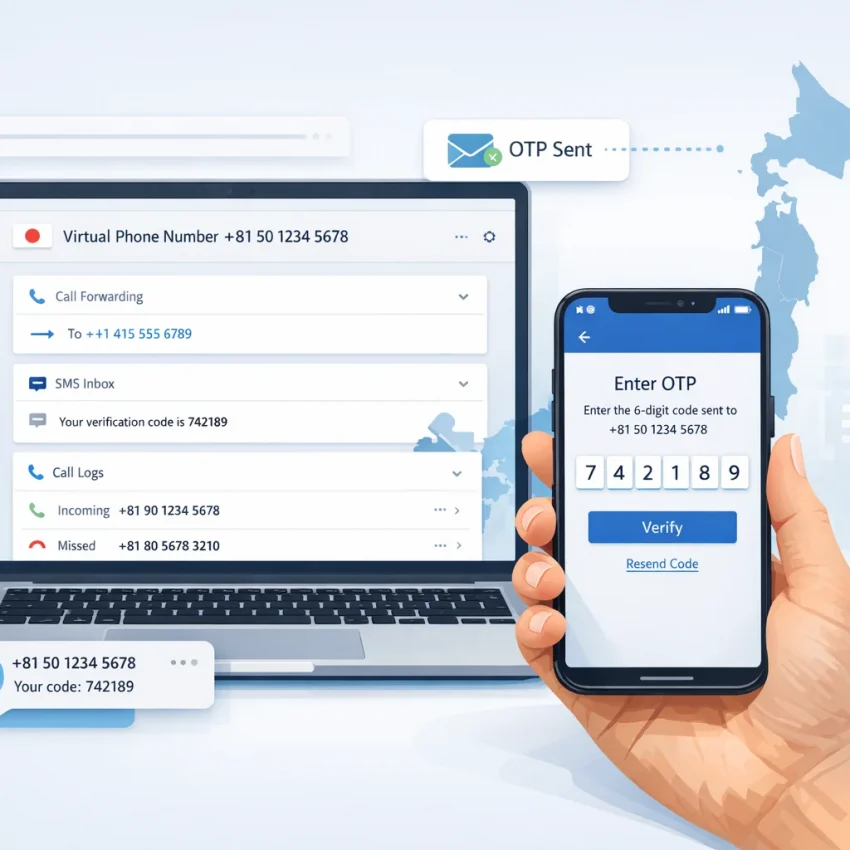
What a temporary Japanese phone number is and when it makes sense to use one
A temporary Japanese phone number is a short-term virtual number used to receive an SMS verification code. Most people use it to complete a signup, activate an account, or confirm a region-specific flow without sharing a personal number.
This is different from owning a physical Japanese SIM card. A SIM is built for ongoing calls, texts, and long-term mobile use. A temporary number is usually for OTP receipt and account verification inside a short session. If you only need to verify an app or website, that focused workflow is often the better fit.
Common use cases include privacy-focused signups, testing a Japanese market registration flow, separating work and personal accounts, or finishing a platform setup that expects a local number format. In these cases, the main benefit is speed. You can move straight to verification instead of arranging a permanent line.
That is where Receive SMS online with SmsPva makes sense. SmsPva is built for SMS verification, OTP receipt, account activation, and service-specific flows. It is not a calling plan replacement. It is a practical tool for users who need a Japanese phone number for account verification with less friction.
When a temporary Japanese number is the right choice
A temporary Japanese number works best when the verification step is the only thing you need. If you are creating a new account, confirming access, or testing a Japan-specific signup, a short-term number is often more efficient than sourcing a local SIM.
It also helps with privacy. If you do not want to expose your main number during a low-frequency signup, a temporary option can reduce that exposure. Many users also prefer it for cleaner account organization.
Country fit matters too. If a platform expects a Japan OTP number, the correct region can make the workflow smoother. You can review current virtual numbers for Japan on SmsPva instead of assuming every service always supports every country.
Keep the use case realistic. A temporary number is best for SMS verification, not daily communication. If you expect repeat messages or longer access to the same number, a rental-style option may be more appropriate when supported.
How SmsPva works for Japanese SMS verification in 2026
SmsPva follows a simple verification flow. You choose a country, select the platform you want to verify, get a temporary number, and wait for the incoming SMS. Then you enter the OTP on the target app or website before the session expires.
The key detail is matching the country and service correctly. Many platforms check the country code during signup. Others work better when the number is tied to a service-specific flow. That is why SmsPva is easier to use than a generic number-first approach.
Start with country and service matching
Choose Japan if the app expects a Japanese phone number. Then select the exact service you are trying to verify whenever that option is available. A number intended for one verification route may not be the best fit for another.
Once you pick the service and country, SmsPva issues a temporary Japanese number for that activation flow when supported. Copy the number exactly as shown. Do not guess the format. If the target site has a separate country selector, set it to Japan there too.
Receive the OTP and complete the session
After you submit the number on the target platform, monitor your SmsPva session for the incoming code. Timing matters. Verification windows are often short, so open the signup page first and request the number only when you are ready to receive the SMS.
Keep the workflow consistent. Avoid switching services mid-process. Use the same target app, country choice, and signup tab until the code is entered. That reduces avoidable errors and makes it easier to receive SMS online with a Japanese number.
Step-by-step: how to use a temporary Japanese phone number with SmsPva
If you need a temporary Japanese number for SMS verification, use this workflow to keep the process clean and fast.
1. Prepare the target signup first
Open the app or website you want to verify. Go to the phone-number step before you request a number. This saves time and reduces the risk of session expiry.
2. Check the Japan flow you actually need
Confirm that the target platform really needs a Japanese number. Some services accept multiple countries. Others expect Japan specifically. Matching the requirement early prevents wasted attempts.
3. Choose the exact service in SmsPva
Select the service-specific route whenever possible. This is one of the most important steps. Many failed verifications happen because users choose the wrong service or try to force a generic route.
4. Select Japan and copy the number exactly
Set the country to Japan if that option appears for your flow. Double-check the flag, code, and region label. When SmsPva issues the number, copy it exactly as displayed. If the target site has a separate country picker, choose Japan there too.
Some forms want the full international format. Others want only the local number after you choose the country. Review the preview before submitting.
5. Trigger the OTP and monitor the session
Submit the number on the target service. Then return to SmsPva and wait for the incoming code. Keep the session open. Avoid sending repeated requests too quickly unless the app clearly allows another attempt.
6. Paste the code and complete verification
When the SMS arrives, copy the OTP and paste it into the verification field immediately. If the app says the code is invalid, check whether a newer code arrived after the one you copied. Use the most recent valid message.
For a service-specific example, if your workflow involves Signal, use the dedicated Signal SMS verification flow instead of a generic path. At the time of writing, a Japan single-SMS Signal flow was listed at $4.00 as an API snapshot. Treat that as a current reference, not a guarantee of future price or availability.
If the message never appears or the setup stalls, use the SmsPva Help page for troubleshooting guidance.
Choosing the right verification flow: one-time OTP, service-specific use, and number rental scenarios
Not every temporary Japanese phone number workflow is the same. The right option depends on whether you need one code or access to the same number for longer.
One-time OTP flow
For most users, a standard one-time verification flow is enough. You choose Japan, select the service, receive the OTP, and finish the signup. This is the fastest path for account activation and simple regional setup.
Why service-specific matching matters
Many users try to use any Japan OTP number everywhere. That often creates friction. Different apps can have different verification rules, formatting expectations, or routing behavior. SmsPva works best when you choose the exact service instead of treating all numbers as interchangeable.
When a rental-style option makes sense
A longer-use option may fit better when a service sends more than one message over time or when you need access to the same number beyond the first code. That is not necessary for most signups, but it can help with repeat checks or delayed confirmation flows.
If your use case specifically needs that model and the service supports it, review the Signal SMS verification rental flow instead of forcing a one-time number into a longer process.
The simple rule is to use the lightest workflow that fits the task. Start with one-time verification for speed. Use a rental option only when repeat SMS access is genuinely required.
Common problems with temporary Japanese numbers and how to fix them
Most issues come from small mismatches between the app’s requirements and the number session you selected. Troubleshooting is usually straightforward if you check the basics in order.
If the SMS code does not arrive
First, confirm that you selected the correct service and the correct country before requesting the number. A Japanese virtual phone number may behave differently depending on the platform you are trying to verify.
Then check formatting. A missing digit, wrong prefix, extra space, or autofill error can stop delivery. Paste carefully and compare the displayed digits before submitting.
Do not abandon the session too quickly. Some services take time to send the first code. Repeated resend attempts can also create confusion if a newer OTP replaces the older one.
When the app rejects the number
If the app says the number is invalid or unsupported, the cause is usually one of three things: the wrong service was selected, the app does not accept that route at the moment, or the signup flow needs a closer region match. Start a fresh session instead of repeating the same failed attempt.
When the session expires
Session timeout is common when users request a number too early. Open the target app first, reach the verification step, then get the number from SmsPva. This keeps the OTP window active when you need it.
If the problem continues after checking service match, country, and formatting, use the Help resource rather than guessing. That is usually the fastest way to fix setup or receipt issues.
Best practices for privacy, compliance, and reliable setup in 2026
A temporary Japanese phone number works best when you use it as a verification tool, not as a substitute for a full mobile identity. Keep the workflow legitimate, match the selected country to the service requirement, and complete the OTP process promptly.
Use a clean, consistent setup
Use one browser profile per verification flow where possible. Avoid switching devices in the middle of the process. Keep the service, country, and signup session consistent from start to finish.
Match the number to the task
Use a one-time number for one-time verification. If the account may later depend on the same number for repeat access, recovery, or staged setup, think about that before you complete signup. Temporary numbers are usually best for short-lived verification tasks.
Protect privacy without adding friction
Privacy-focused workflows work better when they stay simple. Choose the correct service, choose Japan only when the platform requires it, enter the number in the right format, and submit the OTP quickly. If you use account-isolation tools, keep them focused on session hygiene rather than workarounds.
The safest approach in 2026 is practical and straightforward: verify the service, verify the country, request the number only when ready, and complete the code entry in one sitting. For users who need a temporary Japanese phone number for SMS verification, SmsPva remains one of the easiest ways to handle that workflow cleanly.